


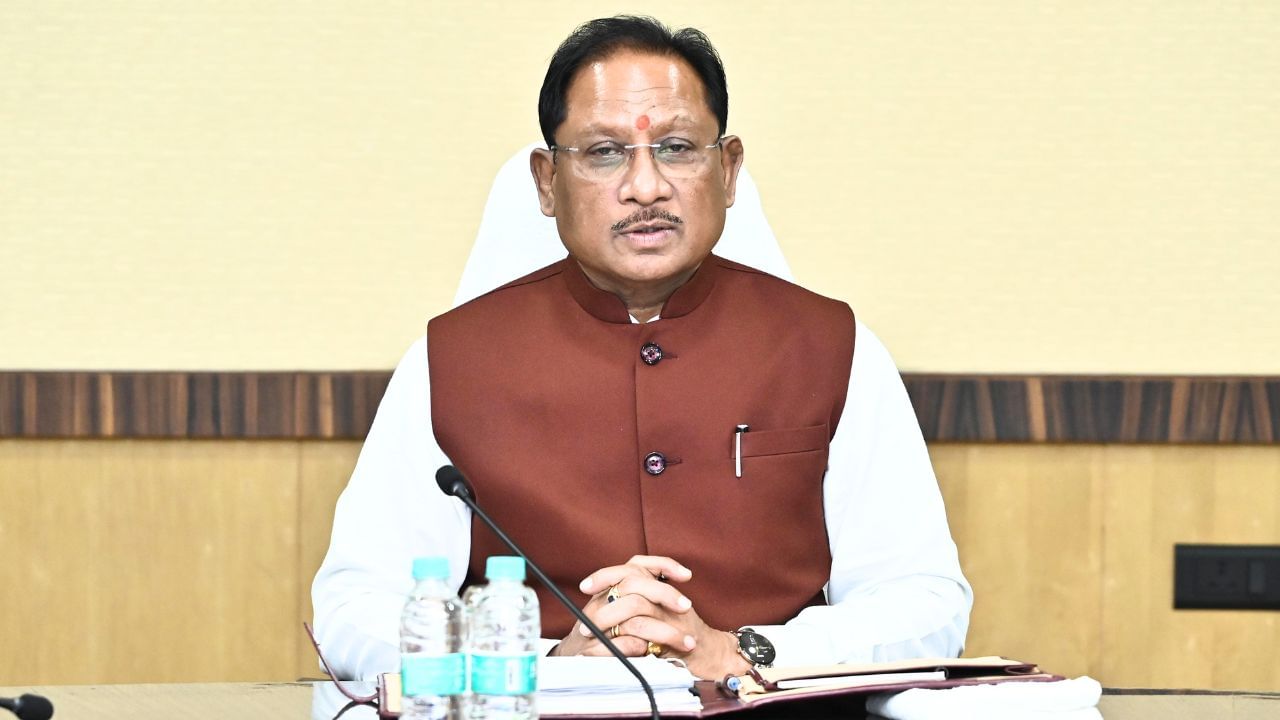
The Chhattisgarh Cabinet, chaired by Chief Minister Vishnu Deo Sai, convened a meeting at the Mahanadi Bhawan in the Ministry on Monday, resulting in significant decisions. The Cabinet made a major decision in favor of farmers, modifying and expanding the scope of the Krishak Unnati Yojana. Now, in addition to farmers who produce paddy, those who cultivate pulses, oilseeds, maize, and other crops in place of registered paddy crops in Kharif 2025 will also benefit from this scheme.
Farmers registered in Kharif 2024 who cultivated paddy and sold it at the minimum support price, and who cultivate pulses, oilseeds, maize, etc., instead of paddy in Kharif 2025, will also receive input assistance under the Krishak Unnati Yojana.
Furthermore, the Cabinet approved the draft of the Chhattisgarh Pension Fund Formation and its Management and Regulation Bill-2025, taking a crucial decision in the interest of Chhattisgarh government officers and employees. This decision aims at better financial management of pension payment-related liabilities at the time of retirement.
To ensure the state’s long-term economic development and fiscal stability, the Cabinet also approved the draft of the Chhattisgarh Growth and Stability Fund Formation and its Management and Regulation Bill-2025. This will provide proper management of unusual increases and decreases in the state’s revenue and financial security during economic slowdowns.
For the overall development of the logistics sector in the state, the Cabinet approved the draft of the Chhattisgarh State Logistics Policy-2025. This policy will help develop Chhattisgarh as a logistics hub and strengthen the export infrastructure. By taking advantage of the state’s geographical location, the policy aims to attract investment from national and multinational companies in the logistics sector and e-commerce for establishing logistics hubs. This will increase the state’s storage capacity, providing cost-effective storage facilities to the state’s industries, traders, and farmers. Reducing logistics costs in the state will boost trade, investment, and economic development.
This policy will encourage the establishment of dry ports and inland container depots, providing an opportunity for micro, small, and medium enterprises and local producers to reach export markets. An eco-system will be prepared for the export of the state’s abundant forest resources, forest produce, and medicinal plant products. This policy will also create new employment opportunities for the youth of the state and establish the state in a leading role in the logistics and export sectors.
In a key decision, the Cabinet approved the draft of the Chhattisgarh Jan Vishwas (Amendment of Provisions) Bill-2025 to decriminalize the provisions of some laws of the state. This Jan Vishwas Bill will increase ease of doing business and living. It will reduce unnecessary court cases and the expenses incurred in them.
In addition, the Cabinet approved 7 schemes under the Redevelopment Scheme for the systematic development and optimal utilization of previously constructed and dilapidated buildings of various departments, corporations, mandals, companies, and boards in the state, along with the unused government land owned by them. These include schemes in Shanti Nagar Raipur, BTI Shankar Nagar Raipur, Kailash Nagar Rajnandgaon, Chandni Chowk Phase-2 Jagdalpur, Civil Line Kanker, Club Para Mahasamund, and Katghora Korba.
Furthermore, it was decided to reduce the minimum qualifying service of five years for promotion from higher-grade registration clerks, record keepers to third-grade executive, and sub-registrars under the Department of Commercial Tax (Registration) to a minimum qualifying service of two years, but only once.