


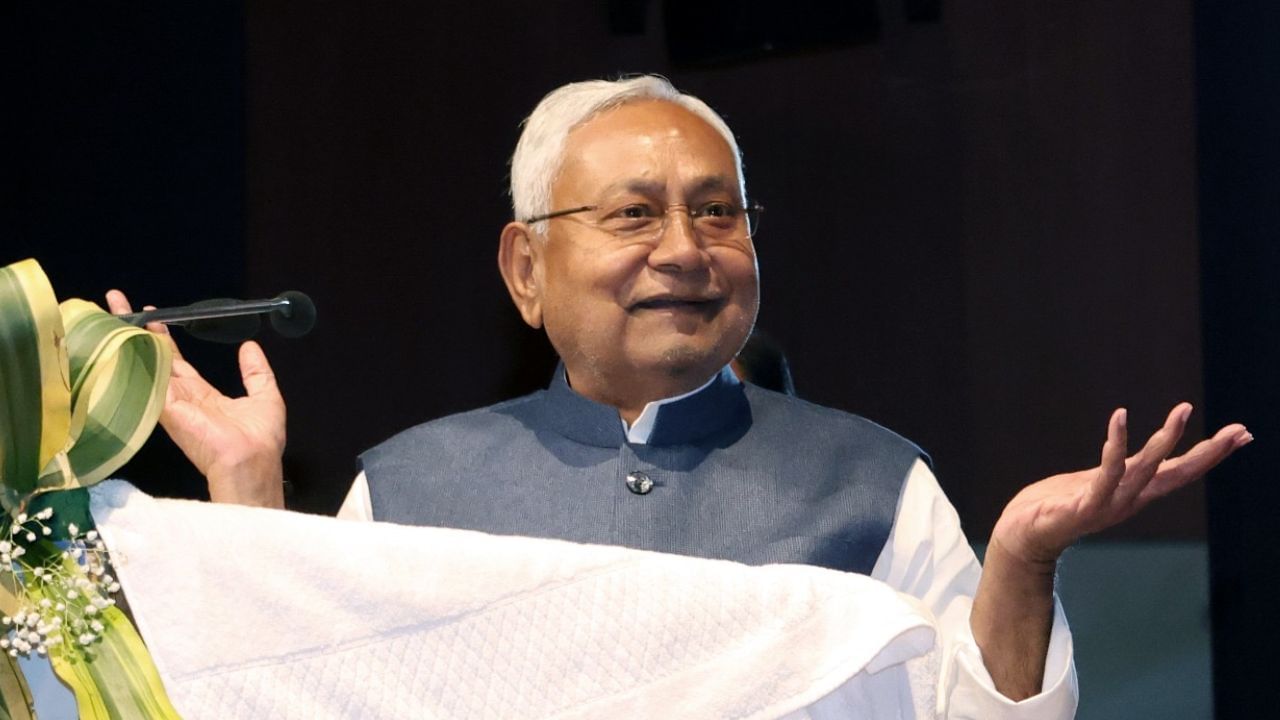
Chief Minister Nitish Kumar conducted an inspection of the development work in the Barabar (Vawanwar) area of Makhdumpur block in Jehanabad district. He provided necessary instructions to the officials. During the inspection, the Chief Minister greeted the devotees attending the Vawanwar Shravani Mela. A large number of devotees visit the Baba Siddheshwarnath Mahadev Temple on Vawanwar Hill to offer prayers during the month of Shravan.
The Chief Minister took detailed information about the arrangements for the Shravani Mela. He directed the District Magistrate to ensure that there were no shortcomings in the facilities provided to the devotees. He emphasized the importance of ensuring that they do not face any inconvenience while offering prayers. The people present at the site welcomed the Chief Minister. He listened to the problems of the people present there and instructed the District Magistrate to resolve them.
The Barabar Caves, located in Jehanabad district, are among the oldest rock-cut caves in the Indian subcontinent. They were constructed during the reign of the Mauryan emperor Ashoka (273-232 BCE) and his successor Dasharatha in the third century BCE. These caves were specifically built for the monks of the Ajivika sect, which was an influential religious sect at the time.
The Barabar Hill has a total of four main caves: Karna Chaupar Cave, Lomas Rishi Cave, Sudama Cave, and Vishwajyoti Cave. Among these, Sudama and Lomas Rishi Caves are particularly noteworthy from an architectural point of view. The entrance of the Lomas Rishi Cave is built in the style of a stupa and chaitya, which later became the basis of Buddhist architecture. The most unique feature of these caves is their smooth and highly polished interior. This presents an excellent example of the Mauryan-era stone polishing technique. Due to this technique, the walls inside the caves shine like mirrors and echo sound, making it a suitable place for meditation.
Barabar Caves not only reveal India’s ancient cultural heritage but also stand as proof of the Mauryan architectural skill. This site is of utmost importance for those interested in history, art, religion, and architecture.