


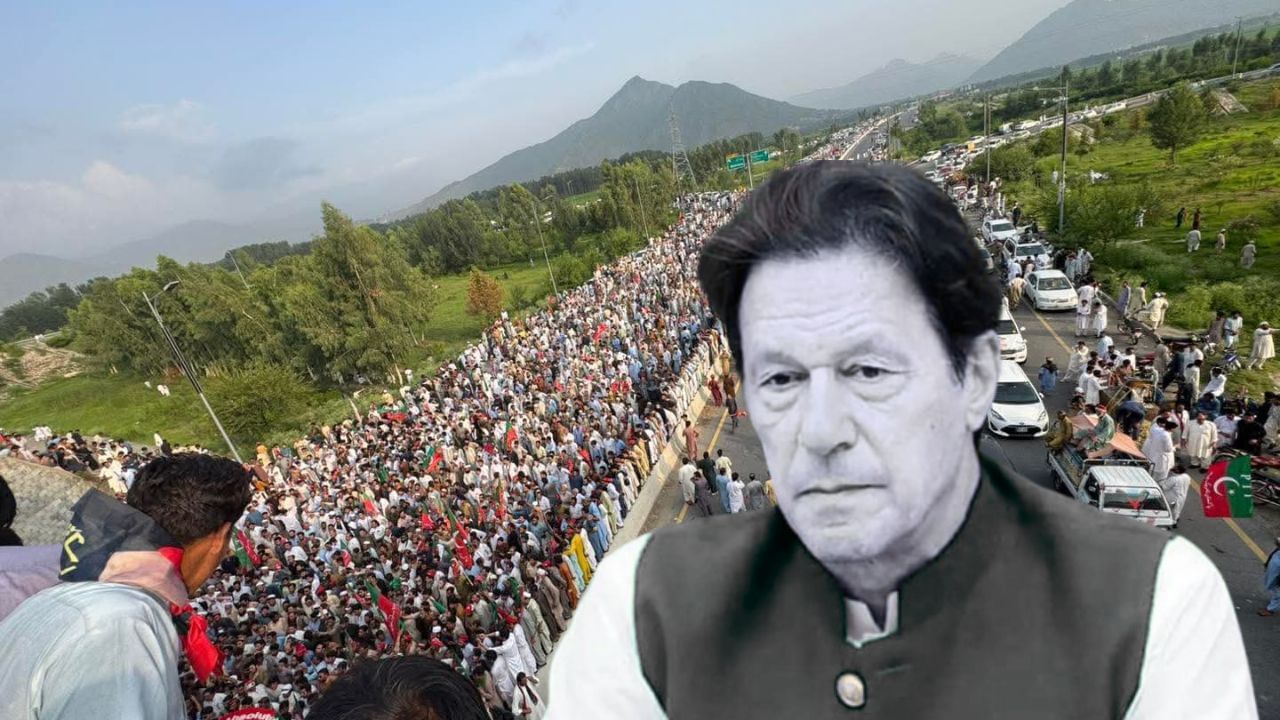
Following a call for demonstrations, supporters of former Pakistani Prime Minister Imran Khan’s party, Tehreek-e-Insaf (PTI), took to the streets across Pakistan on Tuesday. Police responded by arresting more than 500 activists and supporters. Most of the arrests occurred in Lahore, as the protestors voiced their opposition to what they view as a fascist regime. Khan was convicted in a corruption case two years ago, leading to his arrest from his Lahore residence. He is currently incarcerated in Adiala Jail in Rawalpindi.
Senior PTI leader Zulfi Bukhari stated that August 5th marked the second anniversary of Khan’s imprisonment. He highlighted the alleged denial of basic human rights, including limited access to his legal team, family, and political leadership. Bukhari also noted the government’s actions, such as banning gatherings, blocking main highways, and vandalizing vehicles bearing party flags, as well as raids on the homes of active party members. He reported that over 500 PTI leaders and workers had been arrested in Punjab alone, including members of parliament. Bukhari lamented the absence of democracy and the rule of law in Pakistan, describing the treatment of Pakistani citizens as shameful. Protesters planned to continue their peaceful demonstrations.
Police enforced Section 144 in Punjab, prohibiting gatherings of more than four people, leading to the arrests. Despite media restrictions on broadcasting the PTI rallies, videos circulated widely on social media, showing police action against party workers, including instances of officers dragging elderly supporters. These actions drew condemnation.
Another party leader, Musarrat Jamshed Cheema, said that the current government has made breathing a crime, accusing the Punjab ‘fake’ Chief Minister, Maryam Nawaz, of acting like a dictator. She shared a video on social media showing police raiding her home again. She contrasted the situation with a democratic norm, where action is usually taken against protestors if they damage government property, however, in this case, action was taken even before protests began.