.jpeg "Featured Image")




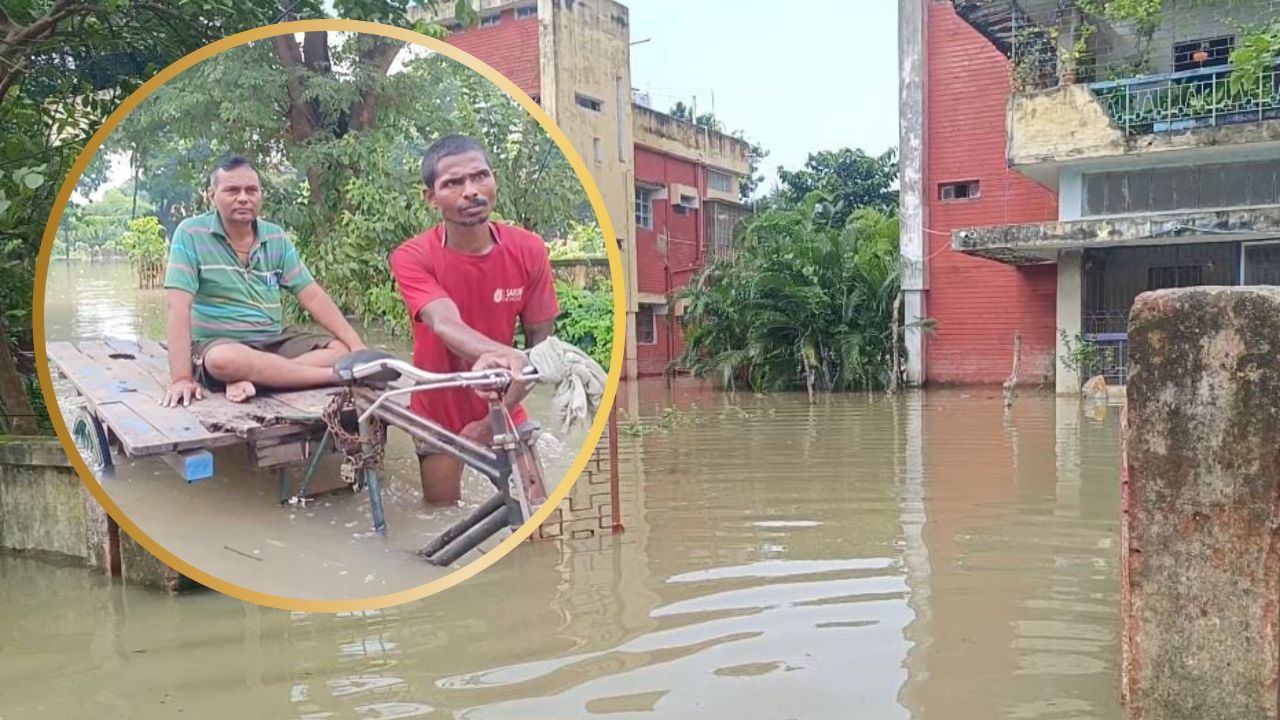
The rising water levels of the Ganges River in Bhagalpur, Bihar, have caused significant disruption, with floodwaters now entering urban areas. Tilka Manjhi Bhagalpur University (TMBU) has been severely impacted, with its administrative buildings, senate hall, and the Vice-Chancellor’s residence submerged. The nearby Professor Colony is completely flooded, trapping professors, teachers, and their families. Many residences are inundated, disrupting daily life. The PG Women’s Hostel was evacuated due to the rising water, but some faculty members in the Professor Colony are now effectively ‘water prisoners,’ unable to leave or find safe refuge. Families are resorting to makeshift transportation to escape their homes, carrying belongings and children to safer locations. Access to colleges and departments also requires using carts.
The Professor Colony faces the additional threat of dangerous wildlife. Local residents report the presence of venomous snakes, such as Russell’s vipers, which are a heightened risk in the floodwaters. Concerns about the spread of diseases are also growing due to contaminated water, unsanitary conditions, and mosquito infestations. The situation has disrupted the supply of drinking water, exacerbating the problems. Affected residents are appealing for assistance from authorities, though the continuous rise in water levels is worsening the situation. The ground report reveals the severity of the flooding, showing professors and their families struggling to save their lives and belongings, highlighting that the flood is no longer just a rural issue but is affecting higher education institutions and their employees.
The Ganges River in Bhagalpur is flowing 40 cm above the danger mark, causing water to enter urban areas. Professor Sanjay Kumar highlighted the difficulties faced by the residents. Professor Ambika Kumar of the Chemistry Department described the challenges of being trapped with his sick mother while trying to protect essential belongings by elevating them. Women are concerned about waterborne diseases, while children fear venomous animals. Cooking has become difficult, and people are forced to evacuate using carts as the situation continues to deteriorate.