



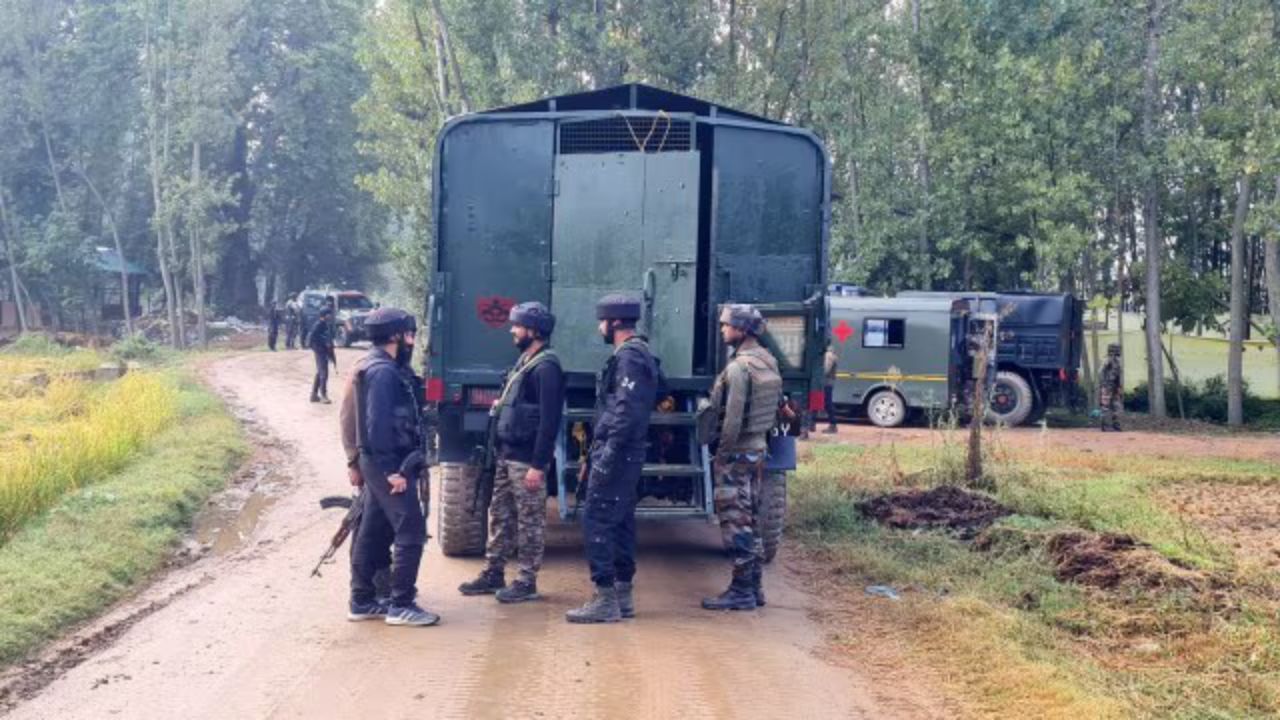
The encounter between security forces and terrorists in Kulgam, Jammu and Kashmir, has entered its ninth day. Two soldiers have been martyred in the ongoing operation. Officials reported that during a night-long exchange of fire on Friday, four security personnel were injured, with two succumbing to their injuries. The officials noted that this is one of the longest counter-terrorism operations in the last decade.
Since the start of ‘Operation Akhal’ in Kulgam, 11 security personnel have been injured. The operation is ongoing.
Chinar Corps of the Indian Army honored the sacrifice of the martyred soldiers on social media. They paid tribute to Lieutenant Colonel Pritpal Singh and Sepoy Harminder Singh for their supreme sacrifice. They wrote that their courage and dedication will always inspire. The Chinar Corps also confirmed that the operation is still underway.
‘Operation Akhal’ commenced on August 1st. Thus far, three terrorists have been neutralized in the encounter. Security forces initiated a cordon and search operation in a forest in Akhal, South Kashmir, following intelligence inputs about the presence of terrorists. After the initial exchange of fire on Friday, the operation was paused for the night. The cordon was strengthened, and additional forces were deployed. When the firing resumed the next day, two terrorists were killed. The identities and affiliations of the slain terrorists remain unknown.
Security forces have established a tight cordon around the area and continue to engage the terrorists, who are believed to be hiding in the dense forests. Senior police and military officials, including Jammu and Kashmir Police Chief Nalin Prabhat and Northern Commander Lieutenant General Pratik Sharma, are closely monitoring the operation around the clock.
Security forces are utilizing drones and helicopters to locate the terrorists in the forest. Para commandos are also assisting in neutralizing the hidden terrorists. The terrorists are believed to be positioned in the higher reaches of the hills, from where they are monitoring the movements of the security forces and frequently changing their positions, making it difficult for the forces to engage them.