


Prime Minister Narendra Modi will inaugurate two major road projects in Haryana on August 17th. These projects are set to provide significant relief for commuters in Delhi and the National Capital Region (NCR). The new expressways include the Dwarka Expressway, India’s first 8-lane urban elevated expressway, and the Urban Extension Road-2 (UER-2). The implementation of these road projects aims to alleviate traffic congestion for residents of Delhi and Gurugram.
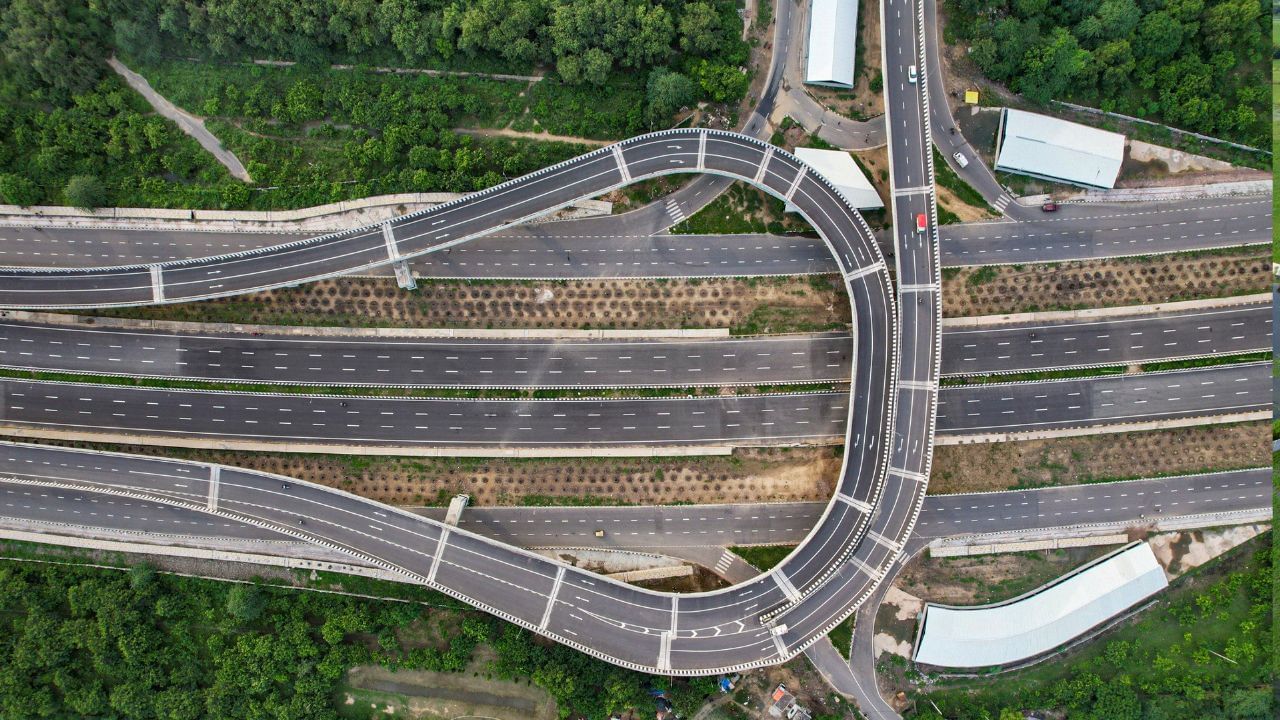
These projects, costing approximately ₹11,000 crore, are designed to ease congestion in Delhi-NCR and Gurugram, facilitating smoother freight transport. The Dwarka Expressway, a pioneering 8-lane structure, stretches from Gurugram to the Delhi Airport. This will dramatically reduce travel time for Delhi residents, with the journey to Gurugram taking just 20 minutes, compared to the previous hour-long commutes often plagued by traffic jams. The expressway features India’s widest tunnel, spanning 3.6 km.
The Dwarka Expressway will offer substantial benefits to residents of Gurugram, Dwarka, Vasant Kunj, and neighboring areas. It will also reduce travel times for commuters traveling to and from Faridabad, Manesar, Sonipat, Panipat, and Chandigarh. The expressway is expected to reduce traffic on the Gurugram road originating from Dhaula Kuan by 50 percent.
The total length of the urban elevated Dwarka Expressway is 29 kilometers, with 18.9 km in Haryana and 10.1 km in Delhi. It begins at Shiv Murti in Mahipalpur, Delhi, and ends at the Kherki Daula toll plaza in Gurugram.
The project will particularly benefit the residents of outer and rural areas such as Bawana, Narela, Mundka, Rohini, Samaypur Badli, Kanjhawala, and Kirari, who will experience reduced travel times to other parts of Delhi. Additionally, access to DDA flats in Narela and Bawana will become easier.
The Urban Extension Road-2 (UER-2), also being inaugurated, is a 75.81 km long road with several elevated sections designed to significantly reduce traffic in Delhi, Gurugram, Sonipat, and surrounding areas. This will lead to reduced traffic at Mundka, Bakkarwala, Najafgarh, Dhaula Kuan, and Mubaraka Chowk.
UER-2 starts at the Delhi-Chandigarh highway in Alipur, Delhi, and passes through Mundka, Bakkarwala, Najafgarh, and Dwarka, before terminating near Mahipalpur on the Delhi-Gurugram Expressway. Designed as Delhi’s third ring road, it is estimated to cost ₹6,445 crore.
UER-II will connect to the Delhi-Dehradun Expressway near Akshardham Temple, benefiting those traveling to Dehradun from Haryana and Rajasthan. This will also shorten travel times for those traveling from Noida to the IGI Airport and reduce congestion on Delhi’s Ring Road, NH-48, NH-44, and the Barapulla Elevated Corridor.
The Dwarka Expressway’s Delhi section will enhance local travel and integrate rail, metro, and bus services through multi-modal connectivity. UER-II will significantly alleviate traffic in congested areas of Delhi, enabling people to catch flights and trains on time and eliminating the fear of being stuck in traffic.