


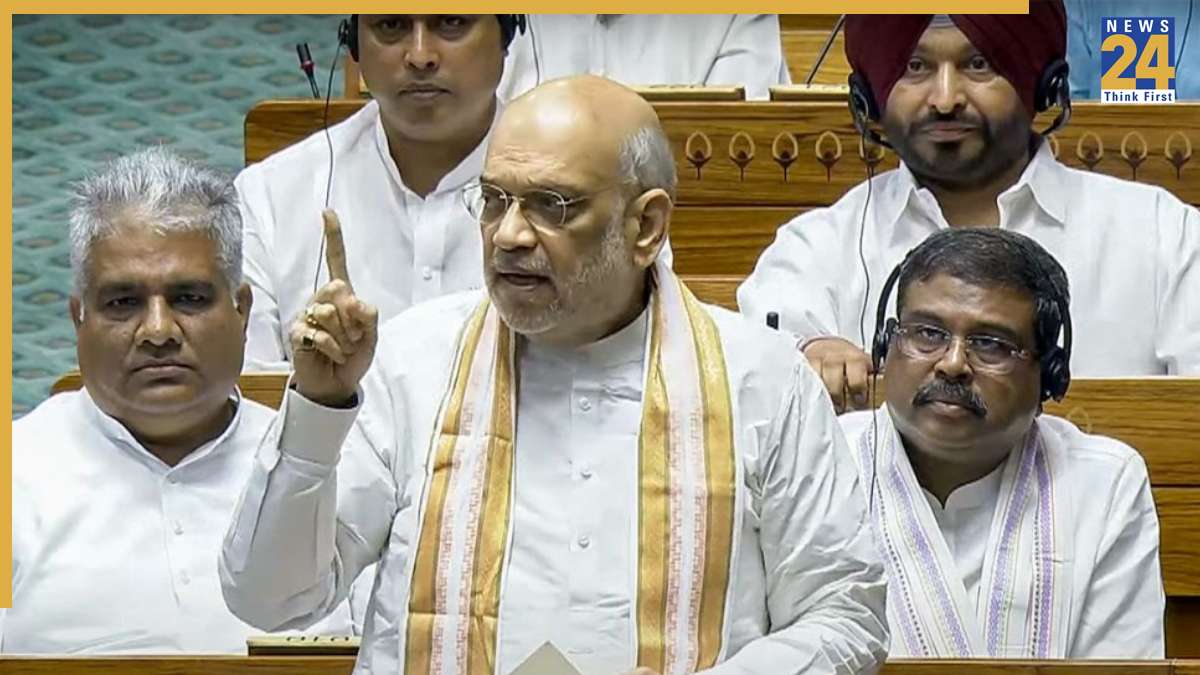
Union Home Minister Amit Shah presented three significant bills in Parliament on Wednesday, sparking considerable debate. The most notable among these is the Constitution (One Hundred and Thirtieth Amendment) Bill, 2025, which addresses the circumstances under which a Prime Minister, Union Minister, Chief Minister, or Minister of State/Union Territory could be removed from their position. This bill proposes that if any of these officials are arrested and detained on serious criminal charges for a continuous period of 30 days, they would be removed from office on the 31st day. The offenses in question must carry a jail term of at least five years. Following the introduction of the bills, Amit Shah suggested that they be reviewed by a standing committee.
The other two bills introduced include the Government of Union Territories (Amendment) Bill, 2025, and the Jammu and Kashmir Reorganisation (Amendment) Bill, 2025. These bills are scheduled for presentation in the Lok Sabha on August 20th and 21st. The Government of Union Territories (Amendment) Bill, 2025, seeks to amend the Government of Union Territories Act, 1963, to provide a legal framework for removing a Chief Minister or minister arrested and detained on serious criminal charges, as there is currently no such provision. Similarly, the Jammu and Kashmir Reorganisation (Amendment) Bill, 2025, aims to amend the Jammu and Kashmir Reorganisation Act, 2019, to address the same scenario within the context of Jammu and Kashmir. The introduction of these bills just before the end of Parliament’s Monsoon Session has caused significant reactions. Opposition members, including Asaduddin Owaisi, have voiced their disapproval, arguing that the bills violate established norms. Furthermore, the Congress party has criticized the move, suggesting that it is a tactic to divert attention from allegations of vote theft and to distract from Rahul Gandhi’s voter rally in Bihar. Priyanka Gandhi Vadra expressed strong opposition to the bill regarding the removal of PMs, CMs, and ministers facing serious charges, calling it draconian and against fundamental principles.