


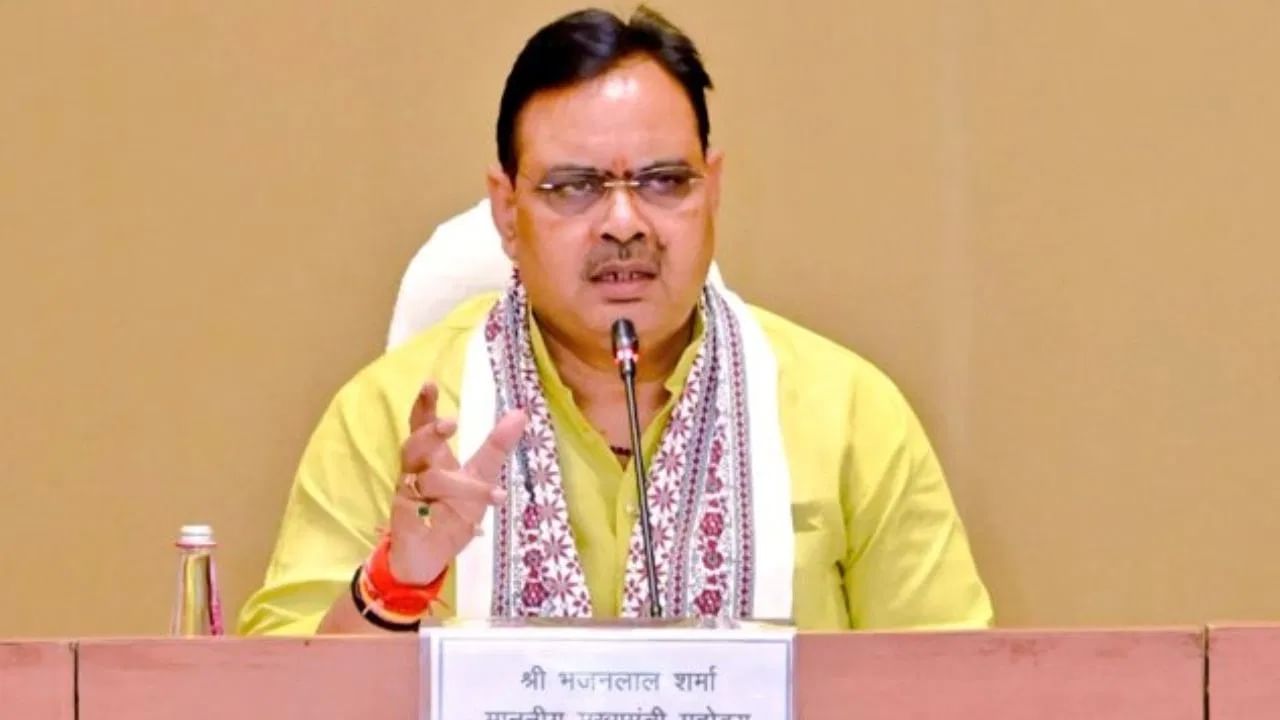
A cabinet meeting, chaired by Rajasthan Chief Minister Bhajanlal Sharma, convened on August 23rd at the CMO. The meeting resulted in significant decisions aimed at propelling the state towards becoming a developed region. The agenda included the approval of the ‘Developed Rajasthan-2047’ vision document, along with two policies and three bills. Key decisions encompassed toll reduction measures and setting an economic target of $4.3 trillion by 2047. Industry Minister Rajyavardhan Singh Rathore and Parliamentary Affairs Minister Jogaram Patel addressed a press conference following the meeting, sharing insights into the cabinet’s resolutions. Minister Patel announced the strengthening of medical and health services, including the establishment of the Rajasthan Institute of Medical Sciences (RIMS) in Jaipur, modeled after AIIMS. The Rajasthan Institute of Medical Science Bill will be introduced in the upcoming session, and a committee will be formed to oversee the institute’s faculty. The meeting also saw decisions regarding a clear land allocation policy in urban areas, addressing the allocation of land for public, social, religious, and educational purposes. A land allocation policy 2025 has been introduced to ensure fairness in land allocation. Provisions were made for land allocation to recognized political parties, newspapers, and companies. Land will be allocated at 25% of the DLC rate, with modifications to the 2015 policy. Furthermore, the cabinet approved the construction of a convention center on Tonk Road in Jaipur, with a capacity of 7,000 seats, at a cost of 3500 crore. Minister Rathore stated that the convention center would be of world-class standard, featuring a five-star and a four-star hotel. The project will be undertaken by the company that built Bharat Mandapam, with a completion timeline of 36 months. Approval was also granted for the allocation of 1280 hectares of land for a solar power plant, projected to generate 2500 MW of electricity. Minister Rathore emphasized that companies establishing solar plants must plant five trees for every tree cut. Additionally, they must undertake CSR activities, including establishing schools and hospitals near the plant sites. Rajasthan aims to become a green energy hub, and work is in progress to achieve this. The Rajasthan Fisheries (Amendment) Bill 2025 was also passed. The state government approved the Land Allocation Policy 2025 for urban areas, facilitating transparent land allocation to social institutions, educational, medical, and industrial units. This policy will replace the Land Allocation Policy 2015. The Fisheries (Amendment) Bill 2025 was also passed, increasing fines for fisheries-related offenses to up to 25,000 rupees, and 50,000 rupees for repeat offenses. Restrictions will be imposed on the unnecessary killing of fish. Amendments to the Rajasthan State Highway Toll Rules were approved to align toll rates on expressways with central government notifications. The Factories (Rajasthan Amendment) Bill 2025 was also approved, allowing workers to work up to 12 hours and permitting women to work night shifts with safety conditions and written consent.