


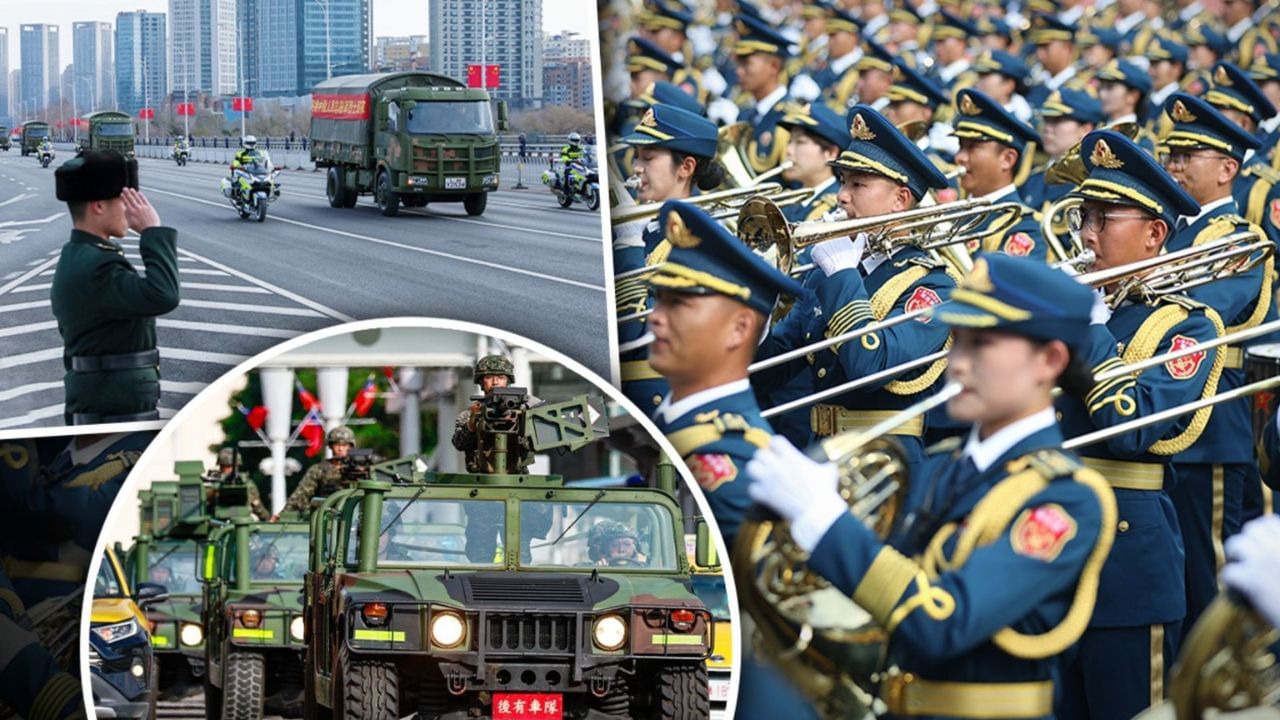
Beijing, China, is preparing to host two major events. The first is the Shanghai Cooperation Organization (SCO) summit, scheduled for August 31st and September 1st in Tianjin. Immediately following this, on September 3rd, the capital will hold a Victory Day military parade, commemorating the 80th anniversary of the victory over Japan in World War II.
China has invited heads of state and prime ministers from over 26 countries to the parade. This includes prominent figures such as Russian President Vladimir Putin, North Korean leader Kim Jong Un, Belarusian President Alexander Lukashenko, Iranian President Masoud Pezeshkian, Indonesian President Prabowo Subianto, Myanmar’s military chief Min Aung Hlaing, Cuban President Miguel Diaz-Canel, and presidents from the Democratic Republic of Congo, Zimbabwe, Serbia, and Slovakia. Southeast Asian leaders, including the King of Cambodia, the President of Laos, and the President of Vietnam, will also attend, along with the Speaker of the South Korean Parliament.
The parade will showcase China’s advanced military capabilities, featuring over 100 fighter jets, missiles, and tanks. Beijing views this as a display of solidarity, especially during a time when Western countries are uneasy about the Russia-Ukraine war and China’s policies in the Asia-Pacific region.
India, along with countries like Turkey and Egypt, will only participate in the SCO summit and will depart before the parade. India has indicated its decision to abstain from the military parade. Similar to Western nations and their allies, India prefers to maintain distance from such events to avoid the appearance of aligning with a particular military axis. A crucial factor is the strengthened relationship between India and Japan. Prime Minister Modi’s recent visit to Tokyo saw both nations adopting a shared vision for the next decade. Participating in the Victory Day parade, which is symbolically linked to the victory over Japan, could have negatively impacted India-Japan relations. India has respected Japan’s sentiments by staying away from the event.
India aims to maintain its relationships with China but prioritizes balancing the Indo-Pacific region with Japan, the United States, and Australia through initiatives like the Quad. Attending China’s military parade could have sent a politically incorrect message for India. The Victory Day parade is linked to the memory of victory over Japan. Participation could be seen as against Japan’s sentiments, while India considers Japan a close partner. India will remain at the SCO to be part of regional cooperation and diplomatic dialogue but will emphasize its independent foreign policy by not participating in the parade. While Beijing will demonstrate close ties with Russia and North Korea, India will stick to its strategic balancing policy and remain limited to the SCO forum.