


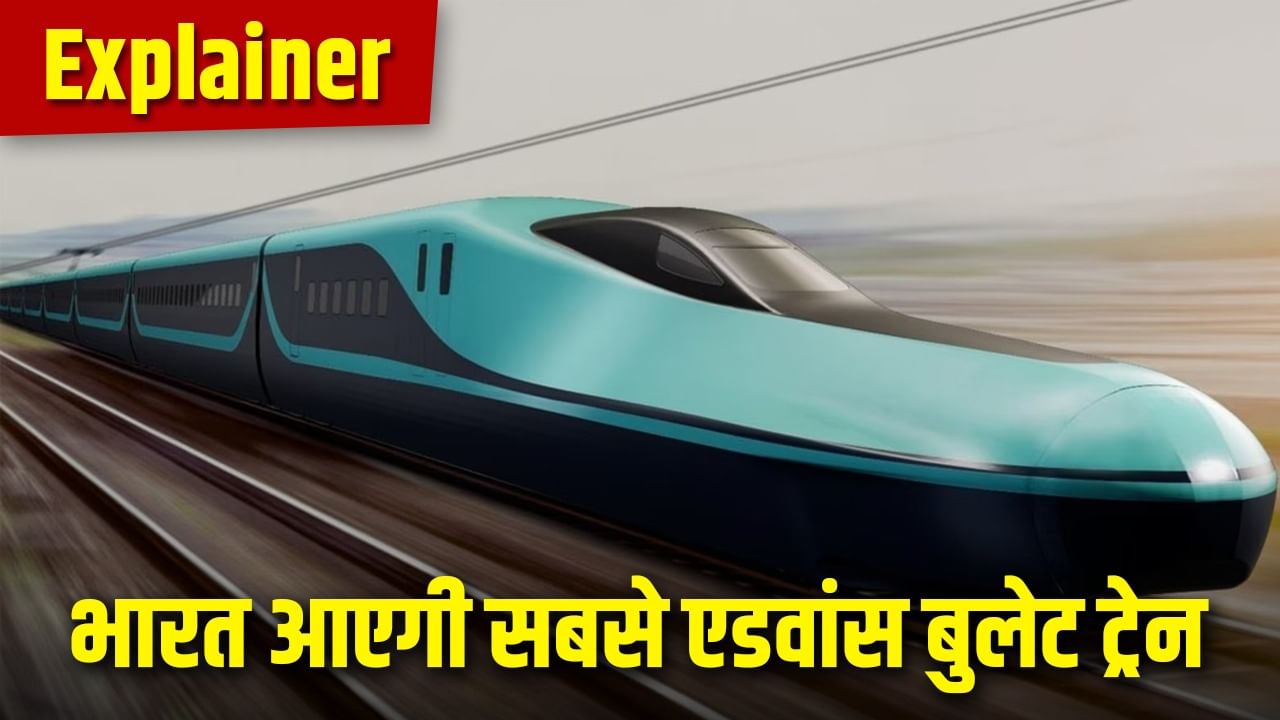
The day is not far when people will be able to complete the journey from Mumbai to Ahmedabad in just 2 hours. The dream of a bullet train in India is going to become a reality very soon. The special thing is that Japan’s most advanced high-speed bullet train will also run in India, which is the E10 series Shinkansen bullet train. During Prime Minister Narendra Modi’s visit, Japan agreed to give this train to India.
Let’s find out what are the features of the E10 series? How is it different from the existing bullet trains? What facilities does it have? When will this advanced bullet train come to India?
The E10 series Shinkansen is an advanced bullet train being prepared by Japan. It will be the most updated and advanced version of the existing E5 and E3 series bullet trains. The special feature of this bullet train is that it can withstand earthquake tremors. Despite being at high speed, it can stop faster than existing trains. It also has more facilities and comfort.
E10 series Shinkansen series has been built by Japan Railways. Its speed is 320 km per hour. However, if run at full capacity, it can reach 360 km per hour. Its braking system is also advanced. The train takes less than 3.4 km to stop from top speed, while the E5 needs 4 km. It also has a more powerful and advanced engine. It can also be run completely automatically in the future.
The E10 Shinkansen series is currently under construction. The E10 bullet train will also start in Japan by 2030. These will be replaced by the E5 and E2 series. In the initial phase, India will also be temporarily given E5 and one E3 train. When the bullet train between Mumbai-Ahmedabad starts in 2027-28, the E5 train will run at that time. Later these trains will also be replaced by the E10 series. During the Japan visit, Modi also visited the factory where the E10 train is being built.
Initially, Japan planned to give India the E5 series Shinkansen train, but due to delays in the project and the arrival of new technology from Japan, India has now been offered the next generation E10 series. Its design is inspired by Japan’s famous cherry blossom flowers. Its biggest feature is that it is earthquake resistant. It has L-shaped guides that prevent the train from derailing during shocks. E10 trains will have more luggage space than E5, special window seats for wheelchair passengers, and a luxury seating arrangement.
India has been waiting for the bullet train for a long time. However, the first bullet train may start by 2028. It has been given the name of the high-speed rail project in India. Now the work is progressing rapidly and the first part of it is expected to start in Gujarat by 2027, while the entire 508-kilometer route will be operational by 2028, which will complete the journey between Gujarat and Mumbai in just two hours and seven minutes. This train will cover the distance from Mumbai to Ahmedabad in just 2 hours and 7 minutes.
In India, the study on the possibility of high-speed rail was started for the first time in 2009. After this, the Ministry of Railways and Japan International Cooperation Agency (JICA) took 4 years to prepare the report. It took another 2 years to reach an agreement due to funds. Later, Japan agreed to provide 80% of the funds for the project in the form of cheap loans. In 2017, the foundation of the first high-speed rail project (MAHSR) between Mumbai-Ahmedabad was laid. At that time, PM Modi and the then Prime Minister of Japan, Shinzo Abe, flagged off the project. Initially, the work was very slow, but now the project may be completed by 2028.