



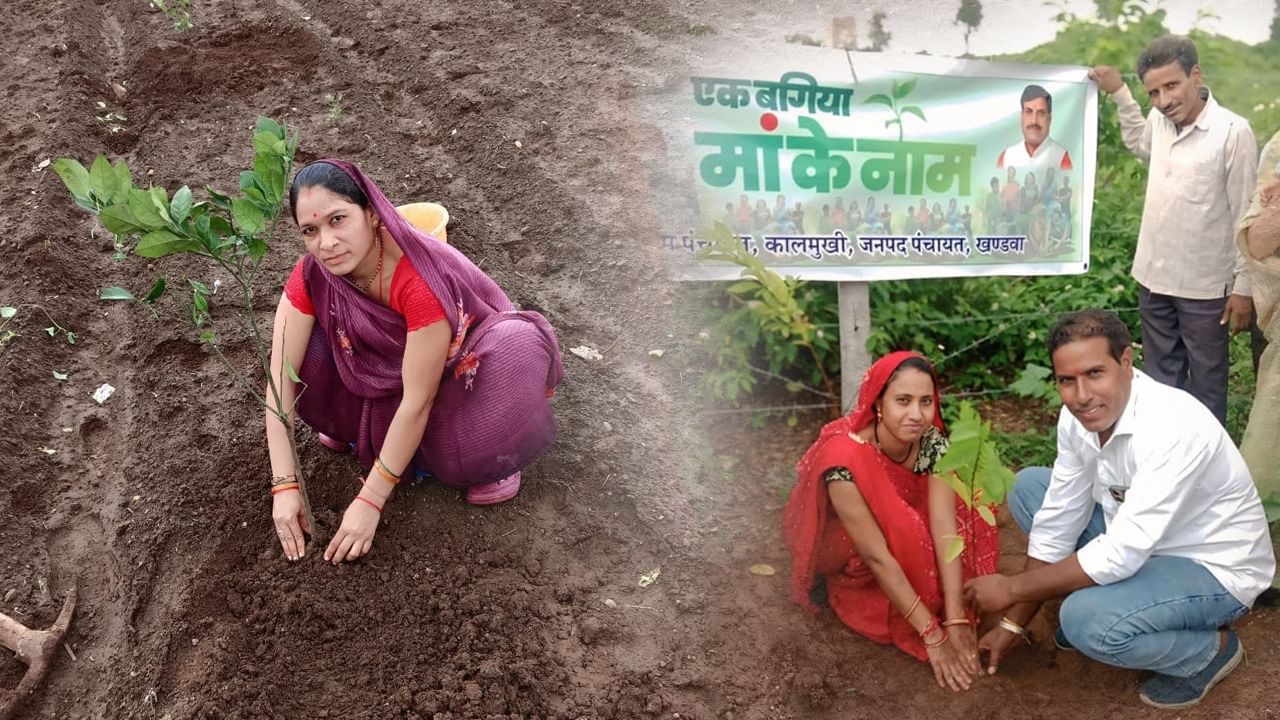
Madhya Pradesh has launched a significant initiative to promote environmental conservation and empower women through the ‘Ek Bagiya Maa Ke Naam’ (A Garden in the Name of Mother) campaign. The state government is actively working towards the economic advancement of women’s self-help groups (SHGs). Under this initiative, Chief Minister Dr. Mohan Yadav has initiated the planting of fruit-bearing trees on private land owned by women’s self-help groups under the Mahatma Gandhi National Rural Employment Guarantee Act (MGNREGA). Khandwa district currently leads in developing these orchards, with Singrauli district following in second place.
Women’s groups are enthusiastic about developing these gardens. So far, 10,162 women have been approved for the project. The state government is investing Rs. 1000 crore in this project to provide resources for fencing, purchasing saplings, providing manure, digging pits, and building water tanks with a capacity of 50,000 liters for irrigation.
The project aims to benefit 31,300 women’s groups in the state, but more than 40,406 women have registered through the ‘Ek Bagiya Maa Ke Naam’ app, exceeding the target. The project encompasses 9,662 gram panchayats across 313 blocks in all districts of Madhya Pradesh. Surveys have been conducted in 10,162 villages within these panchayats, resulting in the registration of 40,406 women. A minimum of 100 beneficiaries have been selected from each block. Women will also receive training twice a year.
The campaign commenced on August 15th, with the planting of fruit-bearing trees on the private land of women’s SHGs across the state, and it is scheduled to continue until September 15, 2025. The Madhya Pradesh Electric Development Corporation Limited will monitor the tree planting through drones to gather information about land selection, pit digging, and the condition of the saplings. Modern technology, including the SIPRI software, is being used for planting. This software scientifically determines land selection for planting, taking into consideration the climate and the most suitable fruit-bearing trees for each area. The software also analyzes where adequate water is available for irrigation. If the land is deemed unsuitable, planting will not proceed. Training has also been provided to relevant officials and employees to ensure the planting is carried out effectively.
Over 30 lakh fruit-bearing trees will be planted on the private land of 31,300 women’s SHGs in the state under the ‘Ek Bagiya Maa Ke Naam’ project, which will form the basis for the economic prosperity of these women. A separate dashboard has been created to monitor the progress of the tree planting and for supervision. The progress of each district is being monitored daily. The top three districts, ten Janpad Panchayats, and twenty-five gram panchayats will be awarded based on their performance. To be eligible for the project, the selected women must have between 0.5 and 1 acre of land for establishing their gardens. As of September 3rd, Khandwa, Singrauli, Betul, Dewas, and Agar Malwa are the top-performing districts. The top 5 blocks include Khandwa, Chitrangi, Pandhana, Punasa, and Khalwa.