

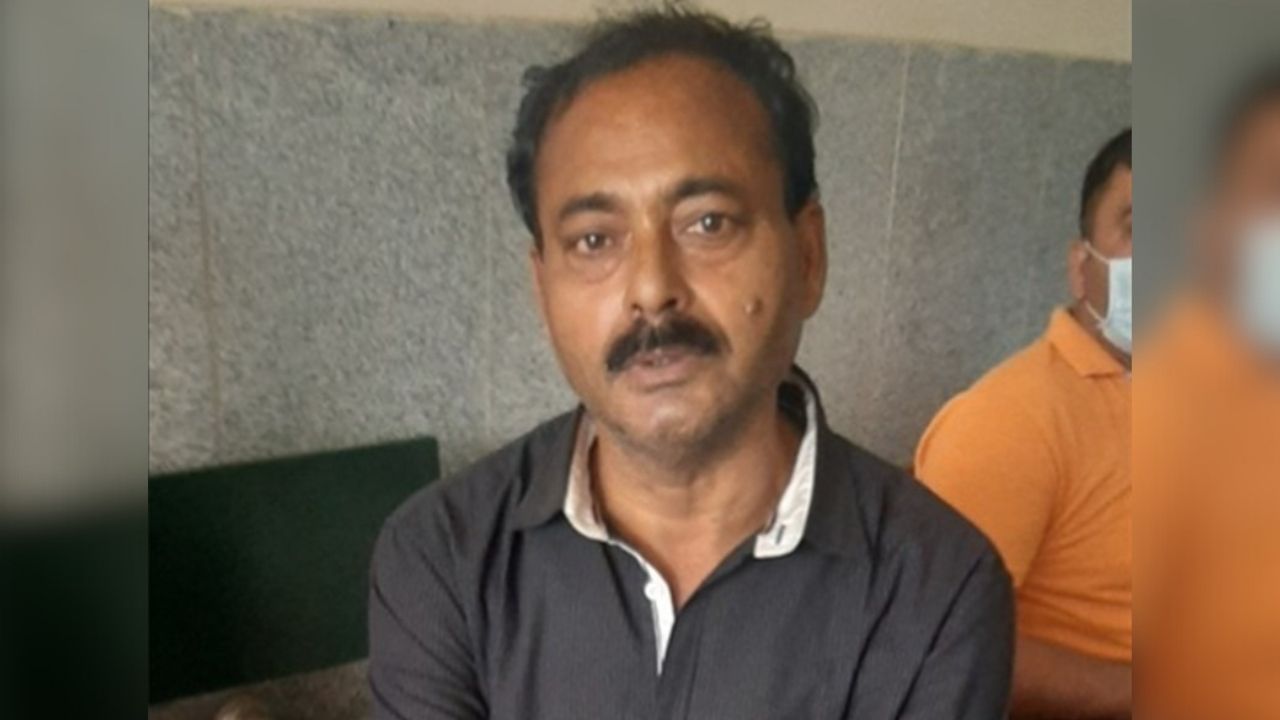
In a significant victory in the fight against terrorism, the Enforcement Directorate (ED) has exposed a major terror funding racket linked to banned terrorist organizations such as the Students Islamic Movement of India (SIMI) and Indian Mujahideen (IM). In this operation, the ED has provisionally seized the immovable property of Raju Khan, a key member of the network, worth crores of rupees. This action was taken under the Prevention of Money Laundering Act (PMLA), 2002, demonstrating the Indian investigation agencies’ commitment to eradicating the roots of terror financing.
This case extends beyond the seizure of a single individual’s property; it tells the story of a complex and well-planned terror funding network that has been active in the country for years. According to investigative agencies, Raju Khan was a “significant part” of this network. Forensic examination of his bank accounts revealed that he received a total of ₹48.82 lakh. Of this, ₹42.47 lakh was allegedly sent to members of the banned organizations. This was done on the instructions of Khalid, who is based in Pakistan, and Dheeraj Sao, his associate in India. This amount, which was in lakhs, was being channeled to sleeper cells and operators spread across different parts of the country to carry out their terrorist activities.
This case dates back to 2011, when Dheeraj Sao, a resident of Bihar, ran a simple chicken shop in the Khamtarai area of Raipur. His life took a new and dangerous turn when he received a call from Khalid in Pakistan. Khalid instructed him to open a bank account and transfer money to certain people. In exchange for this work, Dheeraj was told to keep 13% of the total amount as commission, while the rest of the money was to be deposited in the accounts of Zubair Hussain, Ayesha Banu, and others across the country.
The investigation revealed that this funding was not done in a single instance but was divided into multiple layers. Dheeraj Sao used several bank accounts to receive money from different sources, often in cash. This money was then passed on to people like Zubair Hussain, Ayesha Banu, and Raju Khan. Raju Khan’s accounts were especially important as they were used to further transfer funds to many recipients, making it a complex and difficult-to-trace network.
The ED’s investigation began with an FIR registered at the Khamtarai police station in Raipur, Chhattisgarh, against Dheeraj Sao and others under various sections of the Unlawful Activities (Prevention) Act (UAPA), 1967. The FIR alleged that some bank accounts were being used to receive money from unknown sources in India and forward it on the instructions of Khalid.
According to investigators, Raju Khan played a vital role in this terror funding network. He was not just a front, but a person who actively helped in delivering money to members of the banned organizations. Analysis of his bank accounts showed that he received a total deposit of ₹48.82 lakh. Of this, ₹42.47 lakh was transferred to the members of the organization.
Most shockingly, Raju Khan kept ₹6.34 lakh as commission, which was approximately 13%. The ED has classified this amount as proceeds of crime. This action shows how small players are also involved in making profits by participating in large terrorist schemes. The property of Raju Khan, which the ED has seized, is related to the same ₹6.34 lakh.
This criminal history of Raju Khan does not end here. Since his arrest on December 5, 2021, he has been in judicial custody. However, on December 21, 2023, he was re-arrested in a separate case in Delhi. In this case, he was involved in the distribution of fraudulent SIM cards, which were used in cyber fraud and identity theft. As a result of these activities, more than 180 FIRs were registered in various states. Raju Khan’s bail applications have been rejected in both cases, and he is facing charges under both PMLA and UAPA.
This case progressed with the arrest of Dheeraj Sao in 2013, along with his maternal uncle’s son, Shravan, in Raipur. The information obtained after their arrest led investigators to Zubair Hussain and Ayesha Banu, residents of Mangalore, who were later arrested. However, Raju Khan, who was from West Bengal, remained absconding until 2021, when he was finally arrested. All these accused are currently lodged in Raipur Central Jail.