



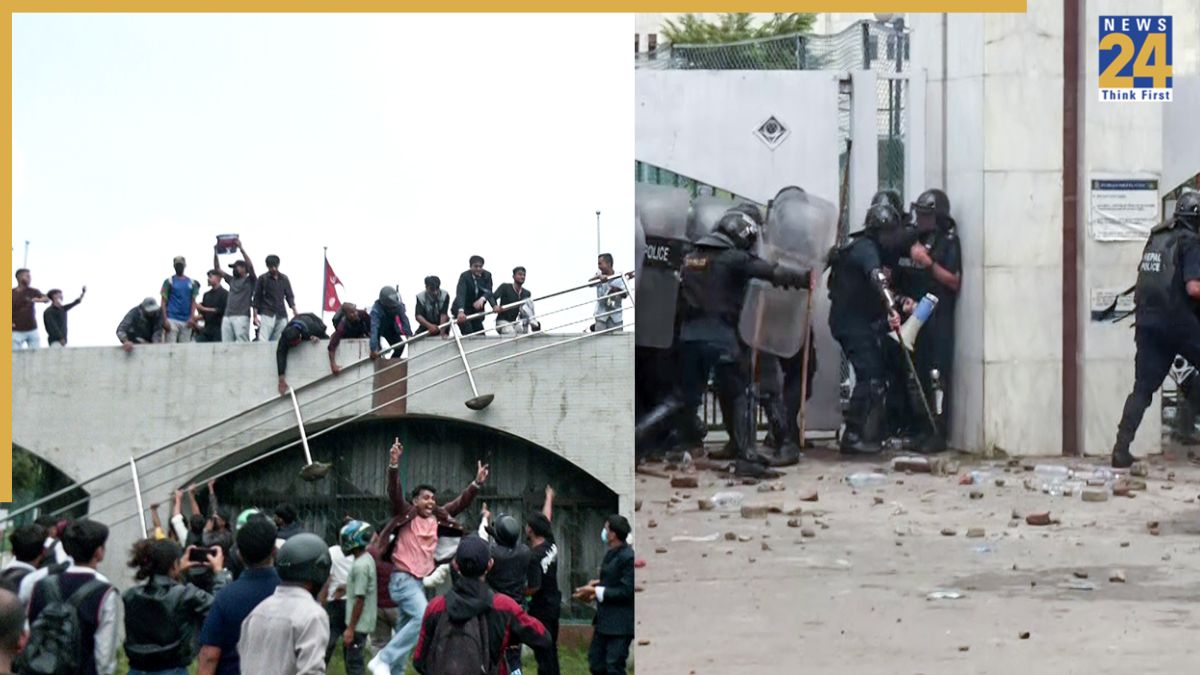
Kathmandu, Nepal’s capital, is experiencing significant unrest, with protests resulting in at least 14 fatalities. The demonstrations, spearheaded by Generation Z, commenced on Monday and are primarily fueled by grievances against government corruption and the recent prohibition of several social media platforms. Protesters vandalized the parliament gate on Monday, and numerous rounds were fired. Several individuals have sustained injuries, and there are fears of more casualties.
As the protests escalated, authorities implemented a curfew in key areas of the capital, which started at 12:30 pm and extended until 10 pm. The Kathmandu district administration office (DAO) expanded the curfew to encompass the residences of the president, prime minister, and vice-president, as well as Singha Durbar. The areas affected include the President’s residence in Shital Niwas, Maharajgunj, the vice-president’s residence in Lainchaur, all sides of Singha Durbar, and the prime minister’s residence in Baluwatar, along with neighboring areas.
The initial peaceful march transformed into violence as demonstrators breached barricades and entered restricted zones near Parliament. Police responded with water cannons, tear gas, and rubber bullets after protesters threw items and voiced anti-government sentiments. Some protesters reportedly accessed the Parliament compound, heightening the tension. The Nepal Army has also been deployed to restore order.
The protests were triggered by the government’s decision to ban 26 unregistered social media platforms, which took effect on September 4. This ban included popular apps like Facebook, Instagram, WhatsApp, YouTube, and Snapchat. The move ignited public outrage, especially among the youth, who accuse the government of stifling free expression while failing to address widespread corruption. They view the social media ban as a violation of their freedom of speech and right to expression. Parties like CPN-UML and Nepali Congress have been targeted for alleged human rights violations and misuse of power.
A protester stated, “We had planned a peaceful protest, but as we advanced, we witnessed police violence. The police are firing on the people, which goes against the spirit of peaceful protest. Those in power cannot impose their will on us. Anti-corruption protests are being suppressed, which infringes on freedom of speech and expression. The police have been firing at protesters.”
Another protester stated, “This is a protest by the new generation in Nepal. A new form of slavery has been introduced in the nation. Nepali youth’s potential is being sold, and high-ranking officials are implicated in the misuse of power. Human rights are being violated by the major political parties: CPN-UML, the radical nationalist party; Nepali Congress, which has been offering support; and the Maoist Center, which has remained silent on the issue. They also banned TikTok at the time.”
Nepal police reported, “Nine people have lost their lives as protests turned violent in Kathmandu as people staged a massive protest against the ban on Facebook, Instagram, WhatsApp and other social media sites, leading to clashes between police and protesters.”
Protests also occurred in Pokhara, Butwal, Chitwan, Nepalgunj, and Biratnagar.