


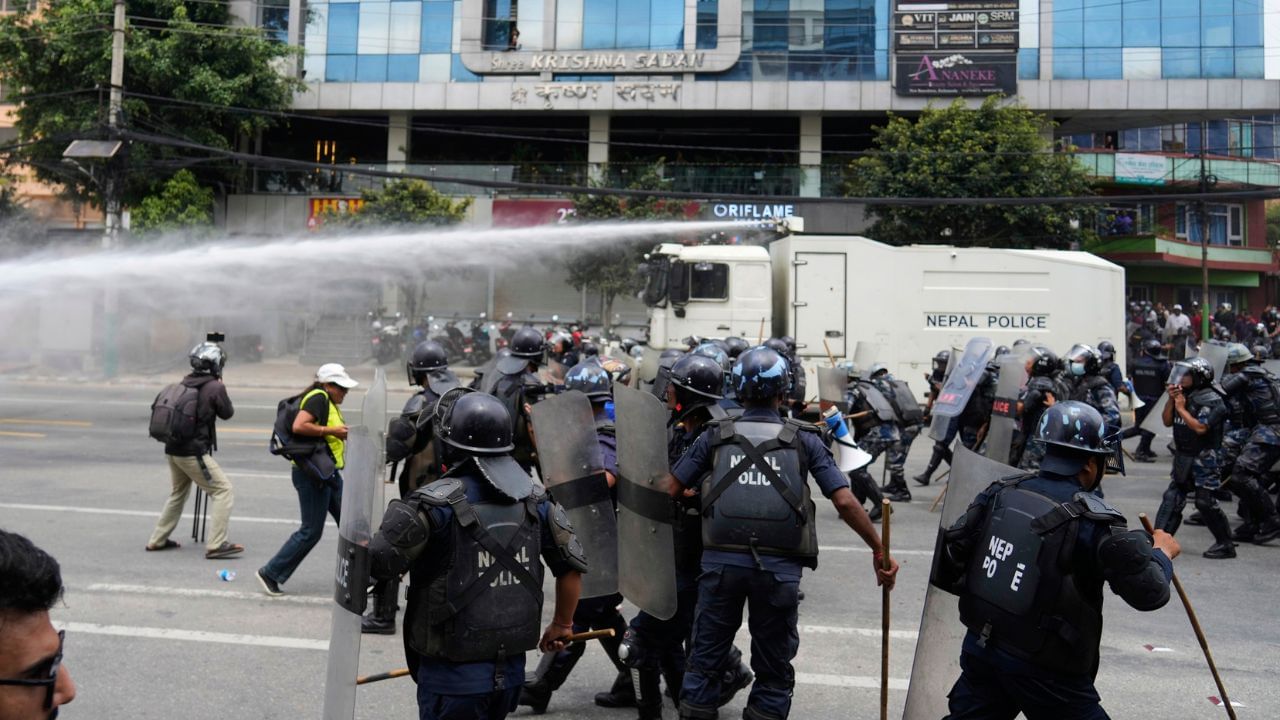
A battle is brewing between the ruling powers and the youth in Nepal, representing a rebellion of the new generation. This is a protest by Gen-Z against the increasing corruption within the aging government led by Oli. It’s a revolution unlike any seen before in Nepal’s history. Protests of this magnitude against the government are unprecedented. Curfews have been imposed in different cities, with over 15,000 young protesters taking to the streets. The central question remains: What is the root cause of these protests? What has led 43% of Nepal’s population to take to the streets and openly challenge the government? Is this a proxy battle between China and the United States for influence?
The primary trigger for the unrest is the Oli government’s decision to ban social media. Restrictions have been imposed on several social media apps. Citing regulations, the government abruptly banned 26 social media platforms, including YouTube, Facebook, and Twitter. Students and young people allege this decision is a direct assault on their freedom of expression. They contend that the government is attempting to suppress their voices to conceal corruption. Questions are also being raised because the banned social media apps are primarily American, while no action has been taken against Chinese social media apps.
It is believed that Prime Minister K.P. Sharma Oli wants to implement Chinese-style censorship in Nepal. The move has also been linked to the growing closeness with China. The sudden ban on social media platforms has shocked the youth. In an era where people are inseparable from their phones, life without social media is hard to imagine. Gen-Z argues that their lives will be severely impacted. Income generated through social media will disappear, affecting the employment of many who rely on it. Furthermore, they claim it will impact children’s education.