



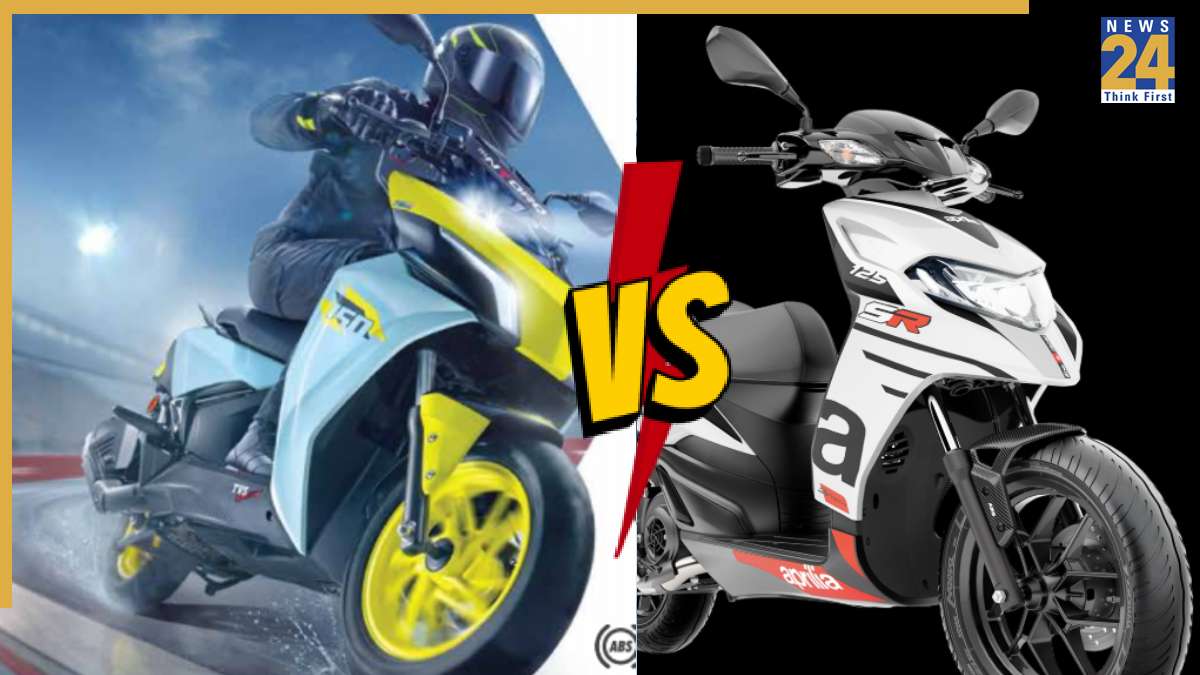
The two-wheeler segment in the nation has been shaken up with the recent launch of the all-new TVS Ntorq 150. The Ntorq 150 is set to compete against formidable rivals, including the Aprilia SR 175, Hero Xoom 160, and Yamaha Aerox 155. This detailed comparison provides buyers with a clear understanding of how these scooters stack up against each other.
While competitors might boast more power, the Ntorq 150’s advanced features and competitive pricing make it an attractive option for riders seeking a sporty and powerful scooter. The Ntorq 150 is equipped with various modern features, including two riding modes (Street and Race), traction control, and single-channel ABS. In Street mode, throttle response is smoother, and peak power is reduced to 10.9hp. The ISG’s electric boost is disabled in this mode, though useful functions like silent start and stop/start fuel-saving technology remain active. Switching to Race mode unlocks the scooter’s full 13.2hp output, along with the ISG’s electric boost.
Practical enhancements have been incorporated into the Ntorq 150, such as a parking brake lock, motorcycle-style adjustable levers, and a spacious 22-liter underseat storage compartment that includes a USB charging port. The scooter also offers an extensive list of connected features when paired with a smartphone or smartwatch through the TVS app, including Alexa voice support, geo-fencing, Bluetooth connectivity for calls and notifications, music playback, SOS triggers, crash alerts, and more. Most of these features are exclusive to the top variant, which incorporates the 5-inch color TFT display and premium switchgear from the Apache RTR 310. The entry-level model utilizes the split LCD/TFT unit from the Ntorq XT and Jupiter 125 SXC, along with simpler controls similar to the Apache 160/200.