



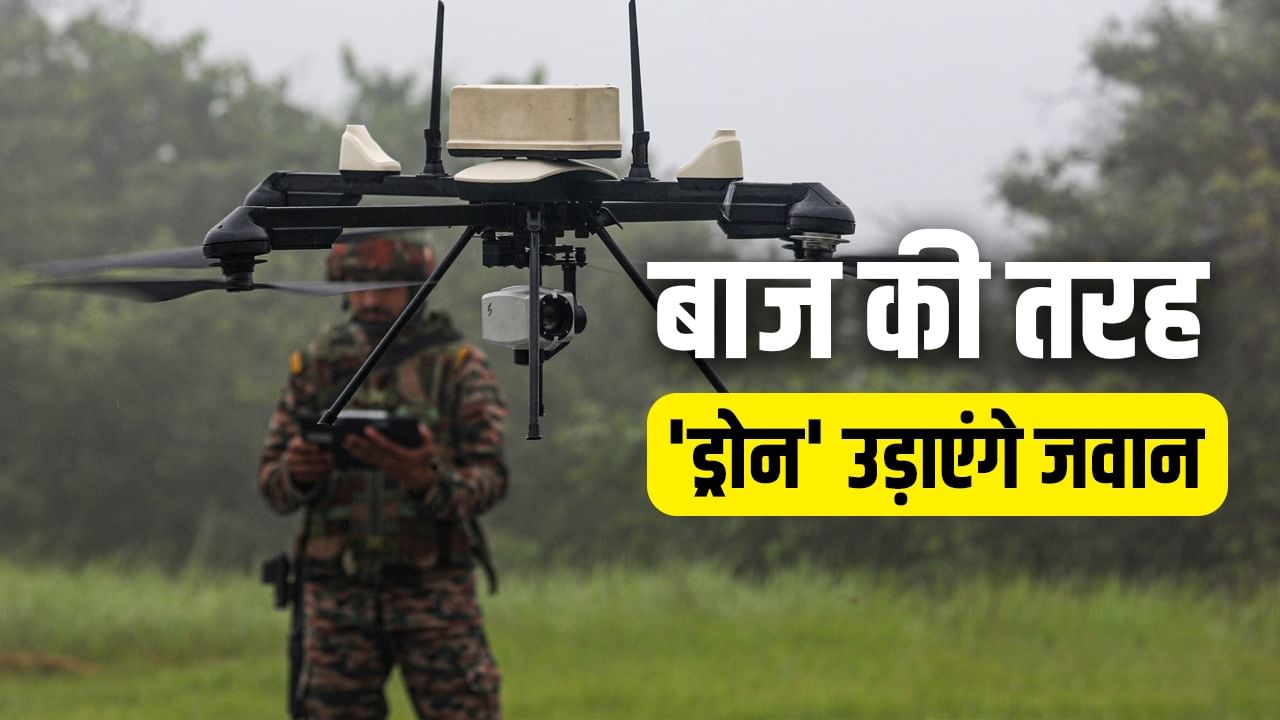
The Indian Army is taking a significant step towards modernization by training every soldier to operate drones alongside their weaponry. This initiative, dubbed ‘Eagle in the Arm,’ aims to integrate the power of a ‘flying hawk’ into each soldier’s capabilities.
Following Operation Sindoor (2025), where India utilized drones and swarm technology extensively, the army recognized the transformative potential of these technologies. During the operation, Pakistan’s air defense systems, including the HQ-9B and HQ-16 missiles acquired from China, were largely ineffective against Indian drones and missiles.
Key outcomes of the operation included:
* Drones blinding enemy air defense radar sites.
* Precise strikes enabling the Indian Air Force and Army to gain a strategic foothold.
* Validation of drones’ decisive role in modern warfare.
Recognizing the evolving nature of conflict, the Indian Army is implementing a comprehensive plan to integrate drones into its operational strategies. This includes establishing drone platoons in every infantry battalion and equipping artillery regiments with counter-drone systems and loitering munitions. Drone training centers have already been established in Dehradun (IMA), Mhow (Infantry School), and Chennai (OTA), with plans to open 19 more training centers and procure 1,000 training drones and 600 simulators.
Army Chief General Upendra Dwivedi announced on Kargil Vijay Diwas (July 26, 2025) that every future soldier would carry not only a rifle but also a ‘flying hawk’ – a drone – to significantly enhance their combat effectiveness. The future of warfare is increasingly defined by drone-versus-drone engagements, whether for surveillance, logistics, medical evacuation, or precision strikes. The Indian Army is formalizing this strategy to ensure that its soldiers are equipped with the most advanced capabilities.