



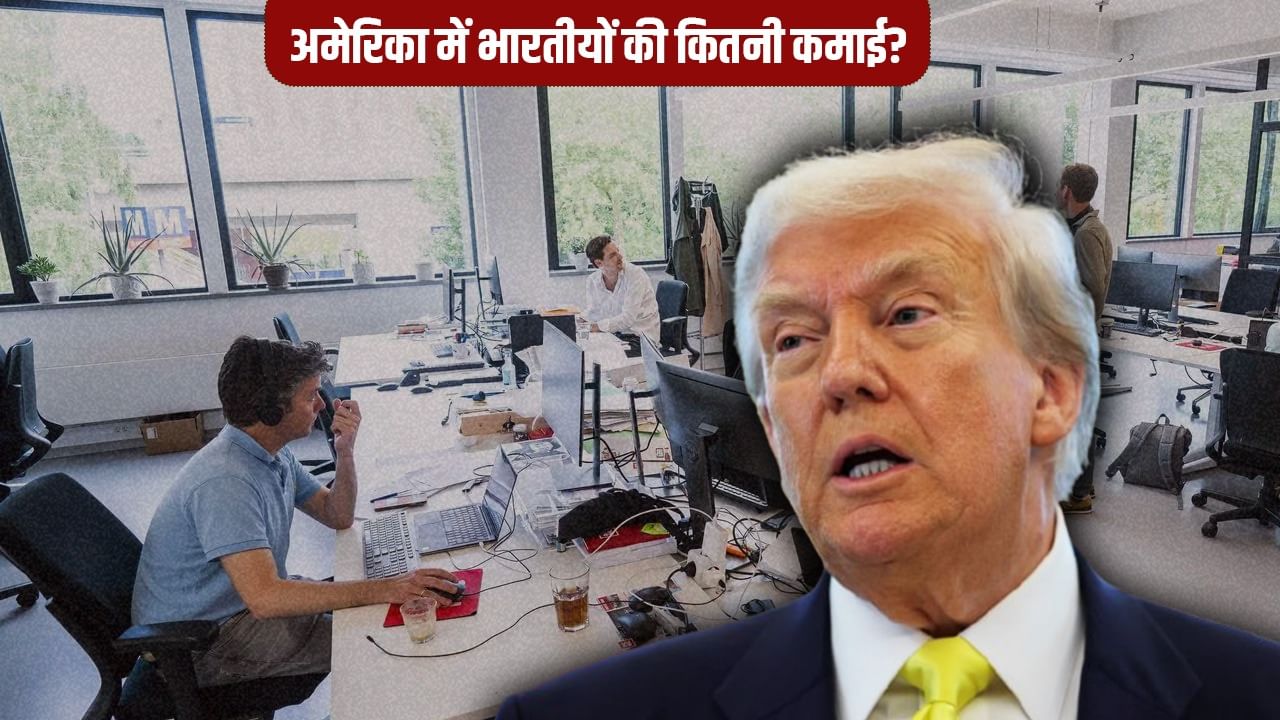
The US government, under the Trump administration, has significantly increased the fees associated with the H-1B visa program. This has caused concern among thousands of professionals hoping to work in the United States. The fee for the H-1B visa, which previously ranged from $2,000 to $5,000, has been raised to $100,000 (approximately 88 lakh). This move is expected to disproportionately affect Indian nationals, who make up a significant portion of H-1B visa holders. The administration stated the increase aims to protect American jobs.
According to US Finance Secretary Howard Lutnick, the fee is a one-time payment, and those already holding an H-1B visa are exempt. A report revealed that 60% of Indian H-1B visa holders earn less annually than the newly implemented fee.
In comparison to other nationalities, Indian professionals in the US generally earn lower salaries. A Bloomberg analysis of 2024 H-1B applications found that Indian H-1B employees had an average salary of $95,500, the lowest among all countries.
Data indicates that around 60% of Indian H-1B employees in 2024 earned less than $100,000 annually. About 12% earned less than $75,000, while 47% earned between $75,000 and $100,000. The remaining 40% earned more than $100,000. Conversely, over 60% of non-Indian H-1B employees had salaries exceeding $100,000 in 2024.
Indian salaries were slightly higher than those of Pakistani and Nepali beneficiaries. Among 25 countries with reliable data, India ranked fifth from the bottom. The average annual salary for non-Indian H-1B employees was $120,000, significantly higher than that of Indian employees.
The H-1B visa is a US worker visa that allows companies to employ foreign professionals in specialized fields such as technology, engineering, and medicine. Indians constitute the largest group of H-1B visa holders, accounting for 71% in fiscal year 2024.