

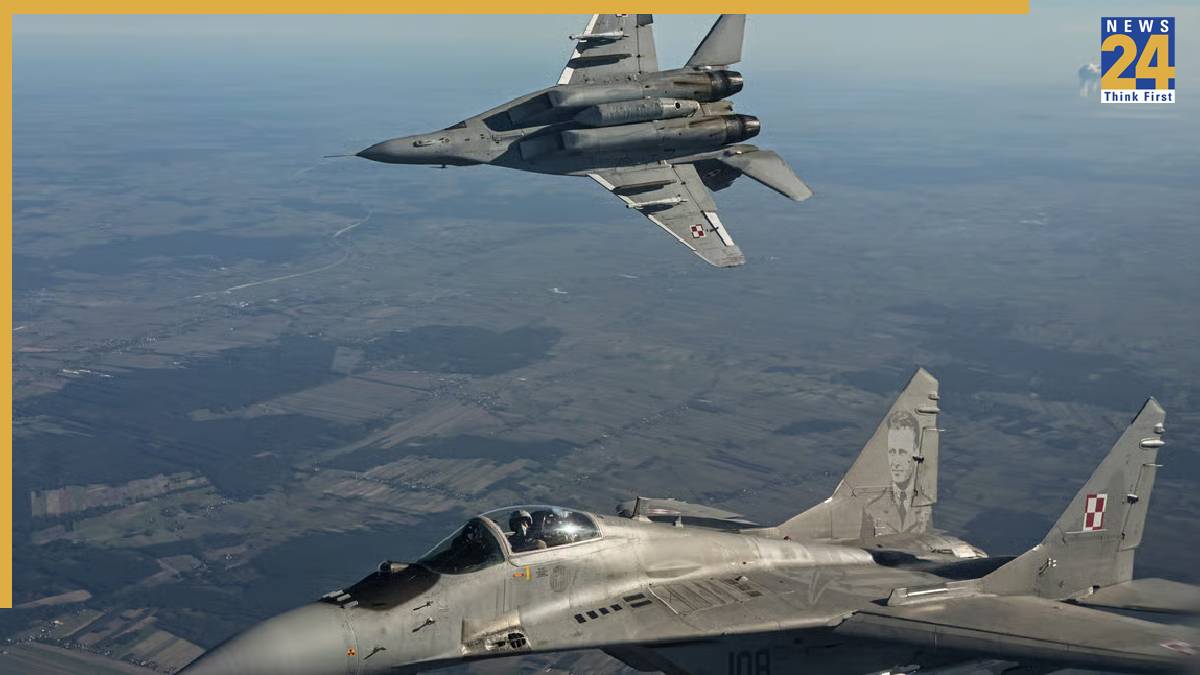
A portion of Polish airspace, situated southeast of the capital, experienced a temporary closure on Sunday due to unspecified military operations, coinciding with an ongoing wave of Russian attacks against Ukraine. The Polish armed forces confirmed the deployment of fighter jets to secure the nation’s airspace, characterizing the action as a precautionary measure intended to protect public safety. This airspace restriction, impacting the cities of Lublin and Rzeszów, was anticipated to remain in effect until the early morning hours. Simultaneously, Ukraine’s air force issued a nationwide alert, initiating air raid sirens from 03:00 GMT on Sunday in response to the Russian missile strikes. Earlier in the month, Polish and NATO forces intercepted Russian drones that breached Polish airspace, representing their first direct military engagement with Moscow since the 2022 invasion. Russia’s Foreign Minister Sergey Lavrov cautioned NATO and the European Union, warning of a resolute response to any aggression. Addressing the United Nations General Assembly in New York on Saturday, Lavrov asserted Russia’s lack of intent to attack the West, but readiness to retaliate if provoked. In response to drone incursions in Denmark, NATO announced the reinforcement of its Baltic Sea mission with an air defense frigate and additional resources, including intelligence, surveillance, and reconnaissance platforms. Unidentified drones were observed near Danish military installations overnight on Saturday, prompting authorities to classify these incidents as hybrid attacks. The Copenhagen airport, the busiest in the Nordic region, was temporarily closed, alongside five smaller Danish airports, both civilian and military, which also ceased operations for brief periods. Neighboring Norway reported police investigations into possible drone sightings near the Oerland air force base, the central hub for its F-35 jets. In Germany, Interior Minister Alexander Dobrindt mentioned a drone swarm over Schleswig-Holstein and indicated intentions to amend air safety regulations to authorize the armed forces to intercept and neutralize drones. On Friday, defense ministers from approximately ten EU countries expressed their aim to prioritize the construction of a “drone wall” to secure their borders. In response, Russia’s Ministry of Foreign Affairs cautioned that these actions would amplify military and political tensions, accusing the EU’s governing elites of pursuing personal ambitions and political maneuvering.