


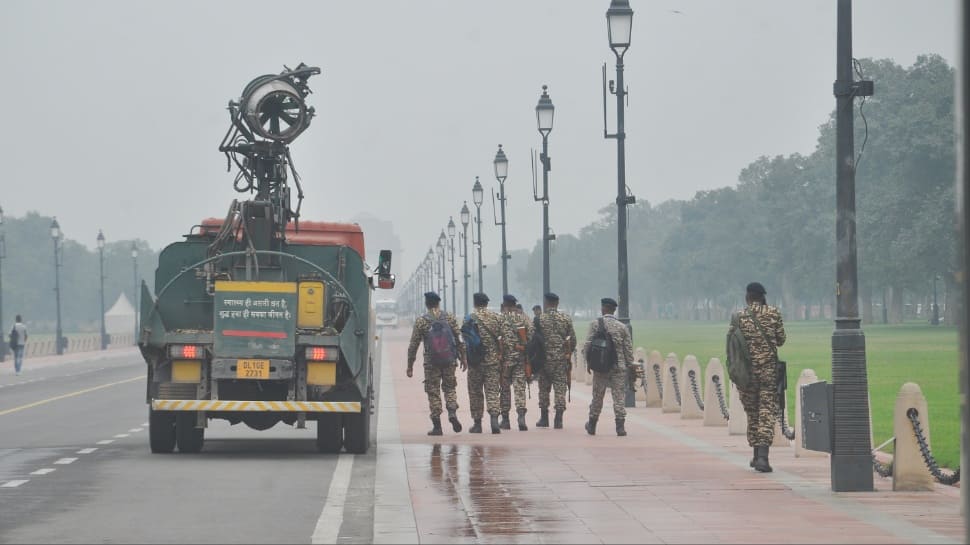
Delhi’s air quality has deteriorated significantly, with many areas falling into the ‘very poor’ and ‘poor’ categories. Responding to the alarming pollution levels, the Commission for Air Quality Management (CAQM) has enforced Stage II of the Graded Response Action Plan (GRAP II). This means stricter measures are now in effect to combat the worsening smog. The Central Pollution Control Board (CPCB) reported high Air Quality Index (AQI) readings on Wednesday morning, with Bawana reaching 322 in the ‘very poor’ range (301-400). Other affected areas include RK Puram (308), Anand Vihar (307), ITO (306), and Ashok Vihar (302). Even areas like Dwarka Sector 8 (298) and India Gate (282) are in the ‘poor’ category (201-300), highlighting the widespread nature of the air pollution crisis. To further tackle emissions, authorities are deploying mitigation efforts like water sprinklers on roads. A significant step begins November 1, 2025, with a ban on non-BS-VI compliant commercial vehicles entering Delhi. This prohibition extends to light, medium, and heavy goods vehicles, including those running on CNG, LNG, and electric power, registered outside the National Capital Territory. Delhi-registered non-BS-VI vehicles will have a grace period until October 31, 2026. In parallel, the Delhi government is experimenting with cloud seeding to induce artificial rain and clear pollutants from the atmosphere. These scientific trials aim to assess the feasibility of generating rain under local humidity conditions, forming part of long-term air quality management strategies.