



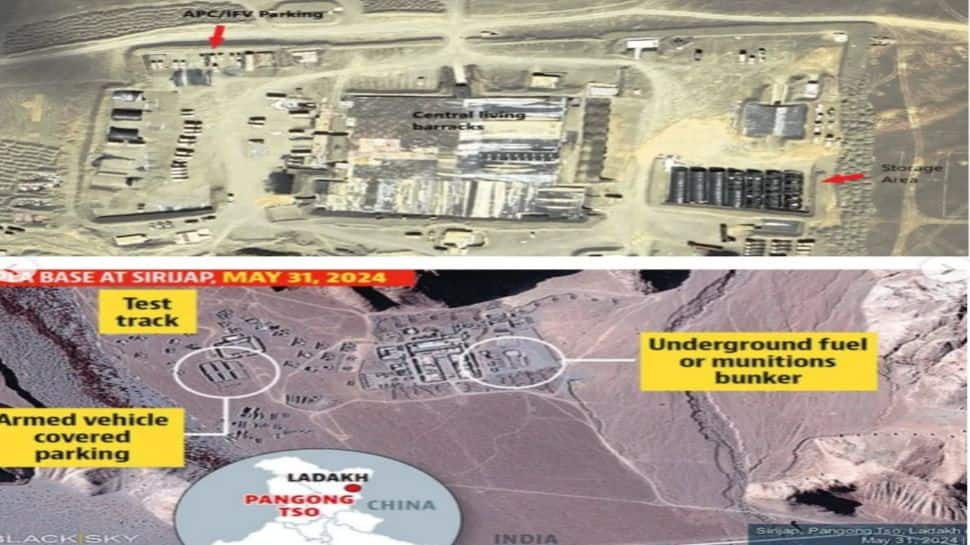
Recent satellite images have exposed significant Chinese military construction near the disputed India-China border, specifically close to Pangong Lake. At least two heavily fortified missile bunkers have been identified in China’s western Tibet region, raising concerns about Beijing’s escalating military posture. These newly revealed installations are believed to be designed to house China’s advanced HQ-9 long-range surface-to-air missile systems. This development is particularly significant given the strategic importance and historical skirmishes that have occurred in this sensitive border region. The HQ-9 system, capable of engaging multiple aerial threats including aircraft and drones, could significantly enhance China’s air defense capabilities along the Line of Actual Control (LAC). Analysts suggest these bunkers are part of a broader effort to bolster China’s ‘anti-access and area denial’ capabilities, potentially targeting Indian air assets well before they reach Chinese-controlled territory. The construction includes features like retractable roofs for concealment and protection, alongside ammunition depots, command centers, and personnel accommodations, indicating a move towards permanent operational bases. This mirrors similar fortifications previously observed by China in the South China Sea, suggesting a consistent strategy of hardening defensive perimeters. The findings underscore a concerning trend of increased militarization along the Himalayan frontier, potentially complicating future de-escalation efforts.
.jpeg "Featured Image")