


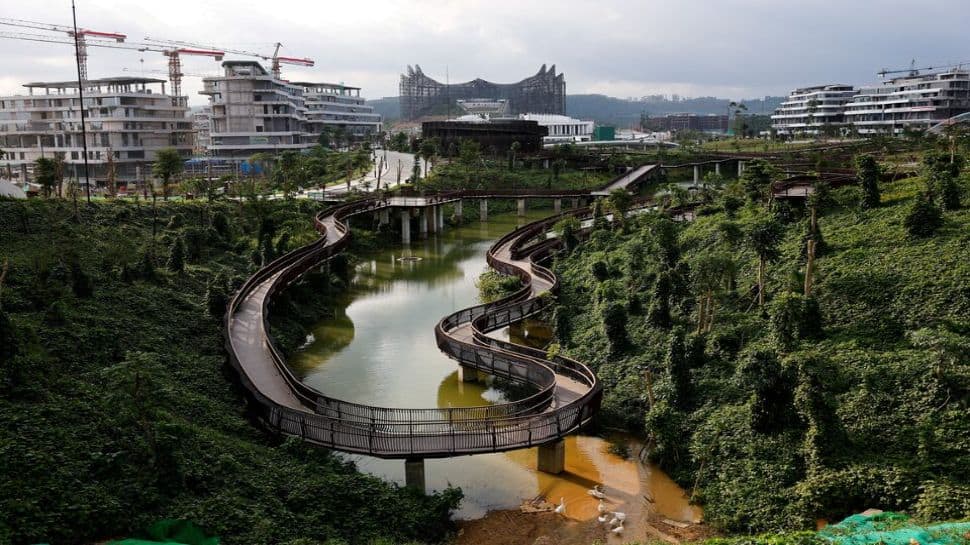
Indonesia’s ambitious new capital, Nusantara, located in the lush jungles of Borneo, is facing a stark reality: the threat of becoming a ghost city. Originally conceived as a gleaming symbol of national progress and a solution to Jakarta’s overwhelming congestion, the project now appears to be faltering. Former President Joko Widodo envisioned Nusantara as a modern, greener alternative, slated for completion by 2030.
However, the grand avenues of Nusantara are currently sparse, flanked by unfinished government edifices. Beyond a handful of groundskeepers and the occasional inquisitive visitor, the anticipated heart of a new Indonesia remains largely devoid of life. The situation has become more precarious since President Prabowo Subianto assumed office in October. His administration has drastically reduced financial commitments to the project. For 2025, government funding has been slashed to approximately 700 million pounds, a significant drop from the 2 billion pounds allocated in 2024. Furthermore, only 300 million pounds, a mere third of the requested amount, has been earmarked for the upcoming year. Compounding these challenges, private investment has also fallen considerably short, missing its targets by over 1 billion pounds.
Adding to the uncertainty, President Prabowo has not yet visited Nusantara since taking office. While he officially designated it as Indonesia’s “political capital” in May, this announcement was only made public four months later. The project’s leadership has also seen instability, with the heads of the overseeing agency resigning in 2024, fueling widespread doubts about the capital’s future.
Currently, Nusantara is home to approximately 2,000 government employees and 8,000 construction workers, a far cry from the target of 1.2 million residents by 2030. The city boasts infrastructure such as apartment towers, ministry buildings, roads, hospitals, water systems, and even an airport, but the majority of these facilities remain under construction.
Experts express concern, with constitutional law scholar Hardiansyah Hamzah from Mulawarman University noting that the project already resembles a “ghost city.” He points out that the “political capital” designation lacks significant legal weight in Indonesia and indicates that Nusantara is not a priority for the current administration. What was once envisioned as a futuristic beacon for the world’s largest Muslim-majority nation now stands as a half-finished, quiet testament to ambitious plans facing significant hurdles.