

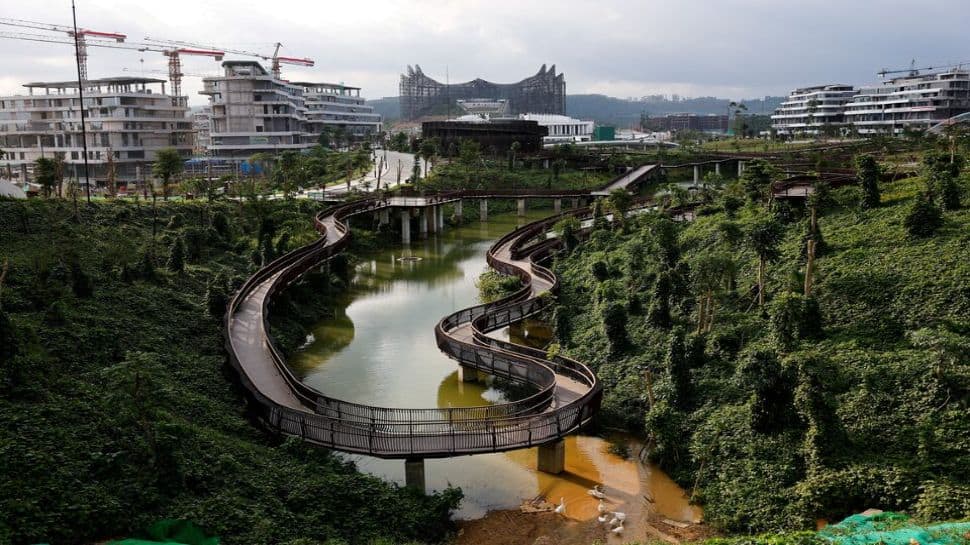
Indonesia’s ambitious plan to relocate its capital from the congested streets of Jakarta to the lush jungles of Borneo is facing a significant hurdle. The envisioned modern metropolis, named Nusantara, is now at risk of becoming a ghost city, a stark contrast to its original purpose as a symbol of national progress. Initiated by former President Joko Widodo, the move aimed to establish a greener, less crowded capital by 2030.
However, the reality on the ground paints a different picture. Wide avenues in Nusantara remain largely deserted, flanked by government buildings that are far from complete. Aside from a handful of groundskeepers and occasional visitors, the city lacks the vibrant life intended for the new heart of Indonesia. The situation appears to have been exacerbated since President Prabowo Subianto assumed office in October. His administration has significantly reduced funding for Nusantara, slashing the budget by over half. The project received approximately 2 billion British pounds in 2024, but this figure is set to plummet to 700 million pounds for 2025, with only 300 million pounds approved for the following year, a mere third of the requested amount. Private investment has also fallen considerably short, missing its target by over 1 billion pounds.
President Prabowo has not yet visited Nusantara since taking office. While he designated the city as Indonesia’s ‘political capital’ in May, this announcement was only made public four months later. Adding to the growing concerns, both the head and deputy head of the agency responsible for the project resigned in 2024, fueling further doubts about Nusantara’s future viability. Currently, the city hosts around 2,000 government employees and 8,000 construction workers, a far cry from the 1.2 million residents projected by 2030. Despite the presence of apartment towers, ministry structures, roads, hospitals, water systems, and an airport, the majority of these facilities are still under construction. Experts suggest the project’s uncertain trajectory has cast a long shadow. Constitutional law expert Hardiansyah Hamzah of Mulawarman University noted that the project already resembles a ‘ghost city.’ He further commented that the ‘political capital’ designation lacks a solid legal basis in Indonesian law and indicates that Nusantara is clearly ‘not a priority for President Prabowo.’ The grand vision of a futuristic capital for the world’s most populous Muslim nation now stands half-finished and eerily quiet, its destiny uncertain.