


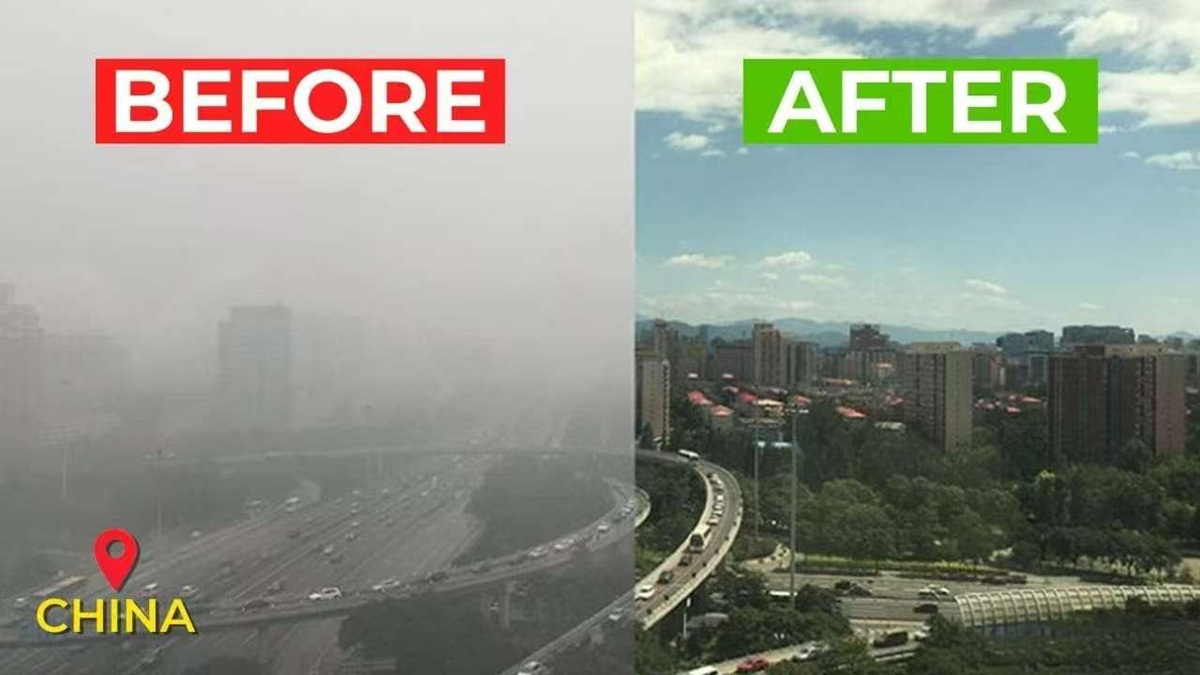
Delhi is once again grappling with severe winter smog, a persistent issue exacerbated by crop burning from neighboring states and widespread emissions from vehicles, industries, and road dust. This seasonal pollution crisis has become an annual challenge. It’s a situation remarkably similar to what Beijing faced a decade ago. The Chinese capital, once notorious as the ‘smog capital of the world,’ has since achieved dramatic air quality improvements through extensive policy interventions and substantial financial investment. China has now offered to share its successful strategies with India to help combat Delhi’s toxic air.
Beijing’s transformation is a testament to decisive action. Faced with alarming levels of nitrogen dioxide and severe respiratory health impacts, China implemented stringent measures. These included removing vehicles from public roads, temporarily shutting down polluting factories, and enforcing much stricter emission standards. A pivotal moment was the 2013 announcement of a five-year action plan specifically designed to combat pollution. This comprehensive strategy promoted electric vehicle adoption, encouraged bike-sharing schemes, and rerouted heavy truck traffic away from densely populated urban centers. Reports indicate that this ambitious undertaking was backed by an estimated $270 billion budget, focusing on sustainable growth and prioritizing public health.
The results have been remarkable. According to the Energy Policy Institute at the University of Chicago, Beijing experienced a significant reduction in pollution levels, with air quality improving by 42.3% between 2013 and 2021. This success is widely attributed to consistent environmental monitoring, rigorous policy enforcement, and substantial financial support. The positive environmental shift in Beijing even contributed to a slight global improvement in air quality during that period.
China’s approach also involved innovative financing mechanisms. The World Bank highlighted China’s ‘Innovative Financing for Air Pollution Control in the Jing Jin Ji region’ as a groundbreaking model. This initiative cleverly linked green finance with energy policy, utilizing a ‘Program for Results’ format aligned with national action plans. The core objective was to reduce pollution by enhancing energy efficiency and promoting the adoption of clean energy sources.
Effective regional coordination proved crucial for Beijing’s success, a lesson directly applicable to Delhi. Studies revealed that a significant portion of Beijing’s air pollutants originated from surrounding provinces, particularly during winter months. This mirrors Delhi’s situation, where winter smog is greatly intensified by stubble burning in Punjab and Haryana. While urban emissions, traffic, and dust contribute year-round, crop burning acts as a major seasonal amplifier. The Supreme Court has consistently urged central and state governments to address stubble burning decisively. Without robust inter-state coordination, Delhi’s air pollution crisis persists.
Beijing’s experience underscores the power of strong policy enforcement and a unified governmental approach. While India may not possess the same vast financial resources as China, it is implementing measures through its National Clean Air Programme. Launched in 2019, this program aims to reduce particulate pollution by 20-30% by 2024 compared to 2017 levels.
Significantly, China has expressed its willingness to share its hard-won knowledge. A spokesperson for the Chinese Embassy in India conveyed that China, having overcome its own severe smog challenges, is ready to share its journey toward achieving clearer skies and expressed confidence in India’s ability to do the same. This openness stems from China’s own extensive efforts to achieve visible environmental improvements.