



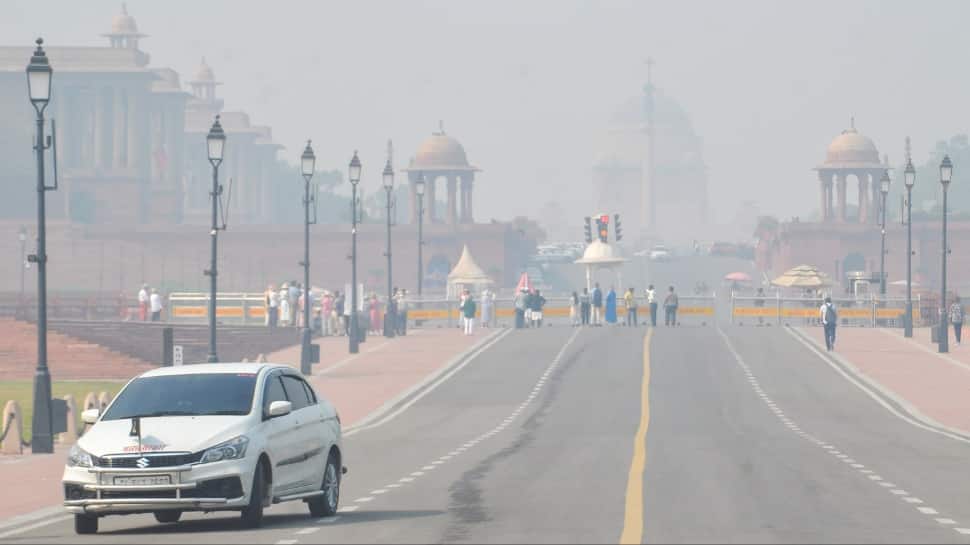
Delhi’s air quality has plunged into the ‘severe’ category for the first time this season, with the Air Quality Index (AQI) soaring above 400 on Tuesday. Residents are experiencing the immediate effects of this toxic haze, including breathing difficulties and irritated eyes. In response to the alarming spike, authorities have activated stringent anti-pollution measures across the National Capital Region (NCR).
The Central Pollution Control Board (CPCB) reported the city’s 24-hour rolling average AQI at 428 by 4 PM, the highest recorded since December 19. This critical AQI level has necessitated the invocation of Stage III of the Graded Response Action Plan (GRAP).
The Commission for Air Quality Management (CAQM) for NCR has implemented GRAP Stage III measures with immediate effect to curb emissions and prevent further air quality degradation. These emergency protocols include a comprehensive ban on non-essential construction and demolition activities throughout Delhi-NCR. Furthermore, restrictions are now in place for older vehicles, with BS-III petrol and BS-IV diesel four-wheelers banned from roads in Delhi and surrounding NCR districts. To protect young children, schools up to Class V have transitioned to hybrid learning modes.
Experts point to unfavorable meteorological conditions as the primary driver behind the severe air quality. Low temperatures, calm winds, and atmospheric inversion have trapped pollutants close to the ground, leading to reduced visibility, which dropped to 600 meters at Safdarjung. While a slight increase in wind speed is anticipated for Wednesday, potentially improving the AQI to ‘very poor’, the air quality is expected to remain in this category until Friday. Environmental analysts stress the need for coordinated action to address local emissions, industrial pollution, and regional factors like stubble burning.