

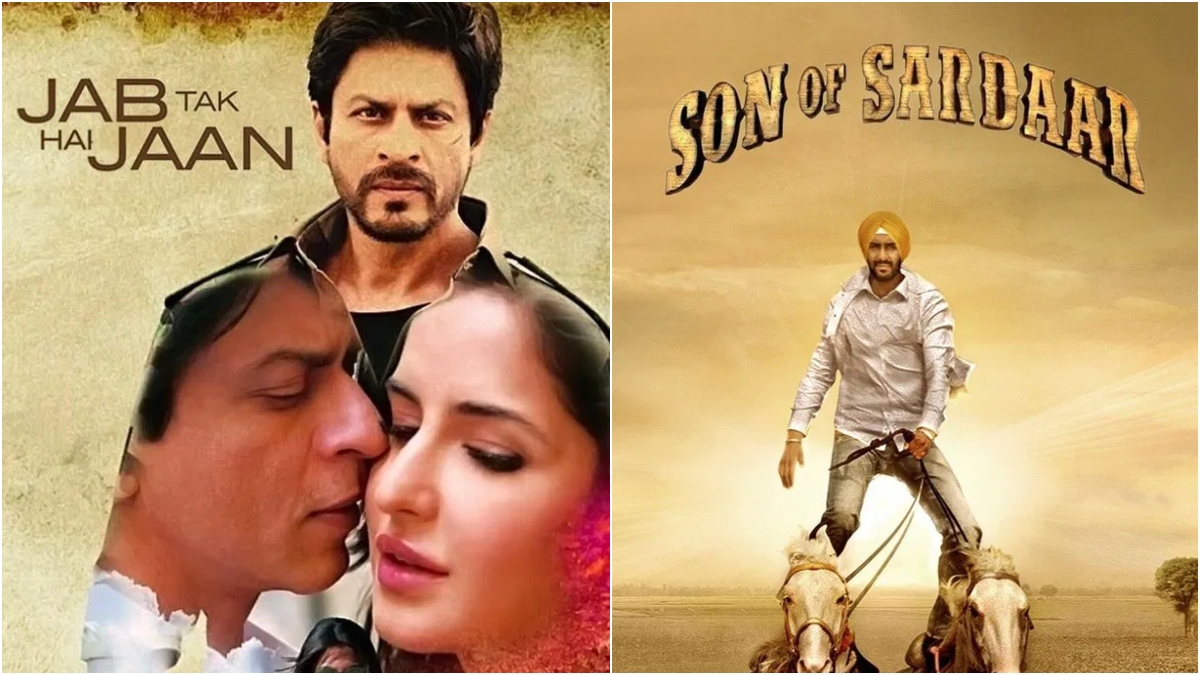
Thirteen years ago, on November 13, 2012, the Indian film industry witnessed a significant box office clash between Yash Raj Films’ ‘Jab Tak Hai Jaan,’ starring Shah Rukh Khan, and Ajay Devgn’s ‘Son of Sardaar.’ This intense competition wasn’t just about box office numbers; it ignited a major controversy surrounding screen allocations, a common tactic by major production houses seeking to maximize their commercial success during festive seasons.
Ajay Devgn voiced his concerns, seeking a ‘fair fight’ by filing a legal notice with the Competition Commission of India (CCI). His production house, Ajay Devgn Films (ADF), alleged that Yash Raj Films leveraged its dominant market position to secure a disproportionately larger number of single-screen theaters for ‘Jab Tak Hai Jaan.’ This alleged favoritism left ‘Son of Sardaar’ with significantly fewer exhibition options, impacting its potential reach.
Devgn emphasized that his complaint predated the tragic passing of veteran filmmaker Yash Chopra, the director of ‘Jab Tak Hai Jaan.’ He acknowledged the difficult position this placed him in, anticipating being perceived negatively for taking legal action. He stated, ‘I had filed the complaint much before the demise of Yash Chopra. When this happened I was like people are going to target me and nobody is going to understand my point of view… I was a villain on both sides. I couldn’t withdraw it (notice) from the Competition Commission… It is not a normal court.’
Despite the legal proceedings, Devgn expressed profound respect for Yash Chopra, stating, ‘I respected Yashji as much anybody else does. We have grown up watching his films.’ He maintained that Yash Raj Films had used coercive tactics with exhibitors to favor ‘Jab Tak Hai Jaan,’ which was slated for release on the same day. His sole objective, he insisted, was to ensure fairness in the distribution process, not to sabotage another film’s release or seek financial compensation.
Shah Rukh Khan, on the other hand, characterized the screen allocation dispute as ‘silly and strange.’ He argued that the film industry operates on free market principles rather than monopolistic practices. Reacting to the controversy, Khan remarked, ‘Instead of being disheartened, it is silly, it is not just right. I don’t know how it gets resolved. Is someone going to tell me not to release my film on Friday.’ He remained hopeful for the success of both films, concluding, ‘The film is coming out, let’s pray for each other’s film. I think both the movies will do well.’