



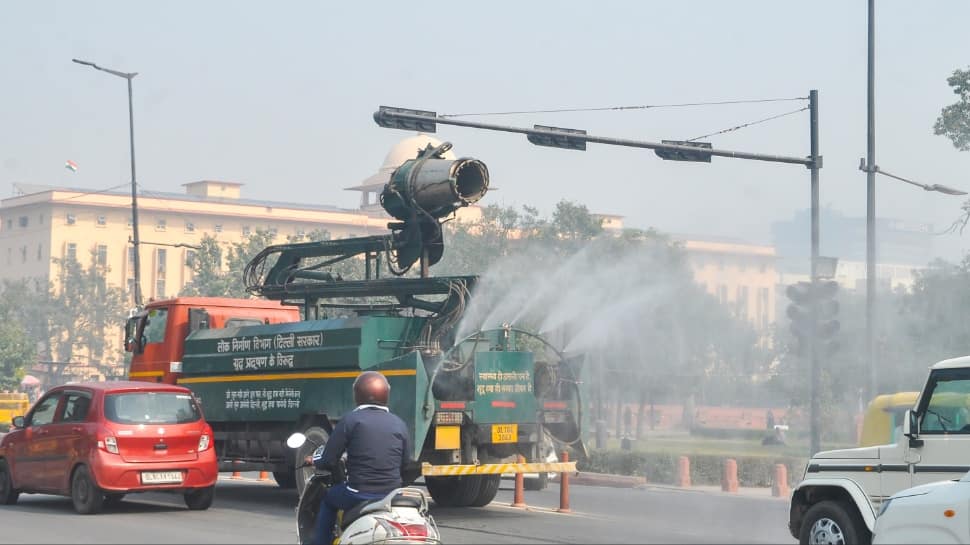
Delhi is currently grappling with severe air pollution for the second consecutive day, with the Air Quality Index (AQI) standing at 418 on Wednesday. This marginal dip from Tuesday’s 428 still places the national capital among the most polluted cities, sharing this grim distinction with Jind, Haryana. The alarming situation has led to the activation of Stage III of the Graded Response Action Plan (GRAP) by the Commission for Air Quality Management (CAQM).
The primary culprit behind the worsening air quality is stubble burning. The contribution of farm fires to Delhi’s PM2.5 concentration surged to a season-high of 22.5% on Wednesday, significantly surpassing local pollution sources like vehicle emissions. This figure represents a worrying upward trend, increasing from 13.7% on Monday to 15.5% on Tuesday.
Experts attribute the persistent haze to a combination of high emissions within Delhi and unfavorable meteorological conditions. Calm winds, low temperatures, and a low boundary layer height are trapping pollutants close to the ground, preventing dispersion. Similar critical air quality levels are being observed in neighboring regions, with Noida recording an AQI of 408 and Rohtak at 406.
Several areas within Delhi are experiencing ‘Severe-Plus’ air quality, exceeding an AQI of 450. Wazirpur, Chandni Chowk, and Bawana are among the most polluted locations. While a slight improvement to ‘Very Poor’ category is forecast for the coming days, the current hazardous conditions are expected to persist.