



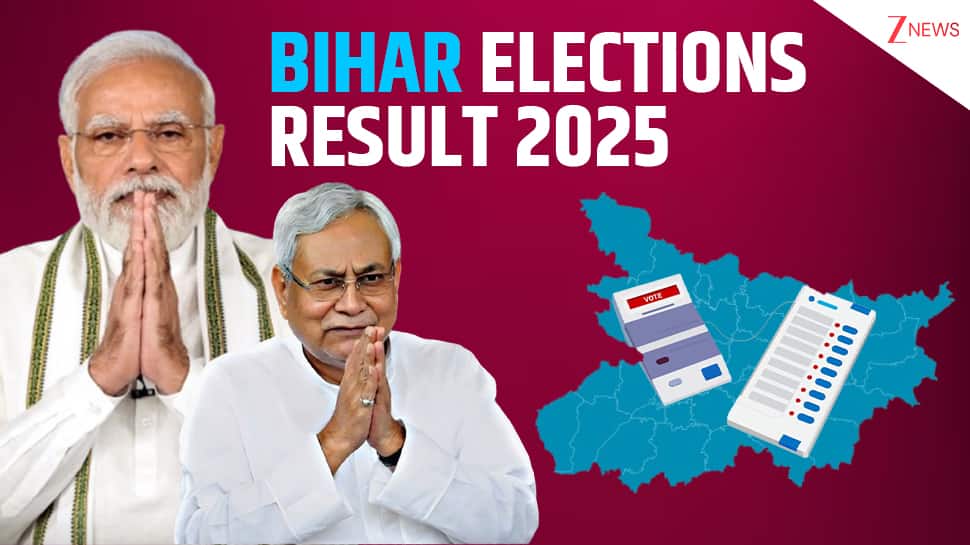
The National Democratic Alliance (NDA) has achieved a stunning victory in Bihar, completely reshaping the state’s political arena and dashing the opposition’s hopes. What was anticipated as a closely contested election, influenced by years of anti-incumbency against Chief Minister Nitish Kumar, culminated in a significant defeat for the Rashtriya Janata Dal-Congress alliance. These election results have not only surprised the opposition but also revealed underlying political shifts that began several months prior, extending beyond Bihar’s immediate political landscape.
The electoral battle in 2024 was markedly different from previous contests. The RJD-Congress combine appeared better prepared, with Rahul Gandhi’s ‘Vote Adhikar Yatra’ boosting Congress morale and Tejashwi Yadav undertaking his own extensive outreach. Both leaders projected increased confidence and experience in challenging the BJP-JD(U) partnership. However, their efforts ultimately fell short where it mattered most.
Questions persist regarding the Congress party’s reluctance to formally endorse Tejashwi Yadav as the undisputed chief ministerial candidate, potentially creating an impression of internal disarray. Prime Minister Narendra Modi effectively capitalized on this by warning voters about a potential return to the ‘Katta Raj’ and ‘Jungle Raj’ eras associated with Lalu Prasad Yadav, a message that resonated despite the RJD’s efforts to distance itself from its patriarch. The electorate’s memories proved to be a potent factor.
The initial indicators of this electoral trend emerged not in Bihar, but in Haryana. Against expectations, the BJP secured an unexpected win there, a result that critics attributed to the Congress’s failure to capitalize on a strong position. This pattern subsequently repeated in Maharashtra, where the NDA, shortly after a less successful Lok Sabha performance, achieved a resounding victory in the assembly elections, securing a substantial majority and catching the opposition off guard. Similar surprising outcomes were observed in Madhya Pradesh and Chhattisgarh, suggesting a broader electoral realignment.
A key element behind this shift appears to be a strategic focus on targeted financial aid to women voters prior to elections. This approach was notably implemented in Madhya Pradesh through the ‘Ladli Behna Yojana,’ providing direct cash transfers just before the polls. The scheme’s significant political impact, coupled with a lack of intervention from electoral bodies, proved highly effective. A similar initiative in Maharashtra, the ‘Ladki Bahin Yojana,’ also played a crucial role in reversing a challenging political climate for the NDA.
Six months ago, the political sentiment in Bihar seemed unfavorable for the incumbent government, with widespread belief that Nitish Kumar’s political career was nearing its end due to anti-incumbency. However, a significant policy shift saw the state government announce a substantial cash transfer for women and increased electricity subsidies and pensions, dramatically altering the electoral dynamic. While Nitish Kumar had a history of implementing women-centric schemes, this final decisive push proved pivotal.
The opposition’s promise of financial assistance for women, while substantial, was perceived as a future assurance rather than immediate relief, leading voters, particularly women, to favor the incumbent government’s tangible benefits.
The NDA also demonstrated a refined caste-based strategy, forging alliances with Chirag Paswan’s Lok Janshakti Party and Upendra Kushwaha’s Rashtriya Lok Manch. These partnerships brought significant vote banks into the NDA’s fold, compensating for any potential losses. Despite internal coalition concerns, the NDA’s strategy proved effective in consolidating support.
In contrast, the opposition’s caste calculations, even with new alliances, failed to achieve the same level of consolidation. The Bihar election outcome has delivered a severe blow to the opposition, dispelling the optimism that followed the BJP’s setback in the general elections. The opposition now faces the stark reality of its inability to maintain momentum, develop a cohesive strategy, or effectively counter the NDA’s evolving political tactics. The consistent electoral trend from Haryana to Maharashtra and now Bihar suggests the NDA has a firm grasp of the current political landscape, while the opposition struggles to adapt.