


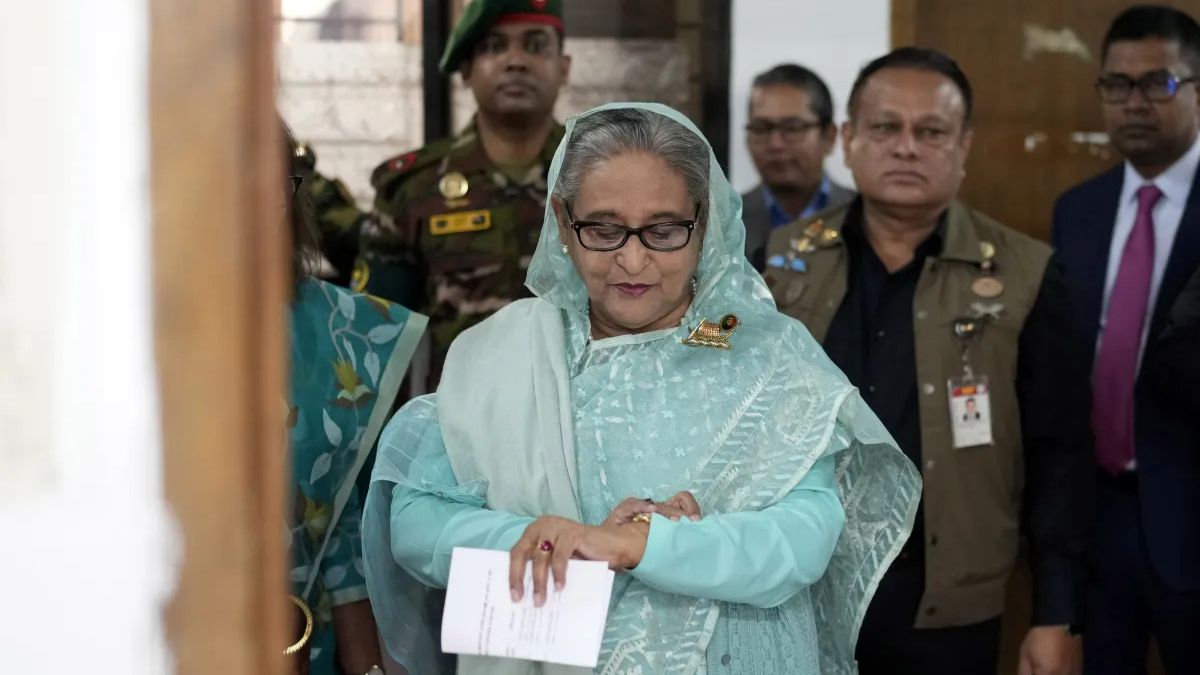
Ousted Bangladeshi Prime Minister Sheikh Hasina has reacted strongly to her death sentence, issued by the International Crimes Tribunal (ICT) for her alleged role in the July-August 2024 unrest. Hasina declared the verdict a politically motivated act, orchestrated by extremist elements within the unelected interim government. She stated that the call for her execution reveals a ‘brazen and murderous intent’ to remove her and dismantle the Awami League party.
Hasina vehemently rejected the tribunal’s findings, particularly the charges of human rights abuses. She highlighted her government’s achievements in human rights and development, including Bangladesh’s accession to the International Criminal Court, providing refuge to Rohingya refugees, expanding access to electricity and education, and overseeing significant GDP growth that lifted millions out of poverty. She contrasted these accomplishments with the perceived lack of comparable achievements by the current administration, led by Muhammad Yunus.
The ICT found Hasina guilty of crimes against humanity following a lengthy trial, asserting she ordered a violent crackdown on last year’s student-led protests. The tribunal also ordered the confiscation of all her property. Alongside Hasina, former home minister Asaduzzaman Khan Kamal received a death sentence, while former police chief Chowdhury Abdullah Al-Mamun was given a five-year prison term.
The 2024 unrest began with student-led demonstrations against restored quotas in government recruitment, escalating into a widespread uprising against Hasina’s leadership. The protests led to property damage and clashes, culminating in protesters breaching her official residence. Following her departure to India, an interim government led by Muhammad Yunus took power, banning the Awami League and initiating proceedings against Hasina.