



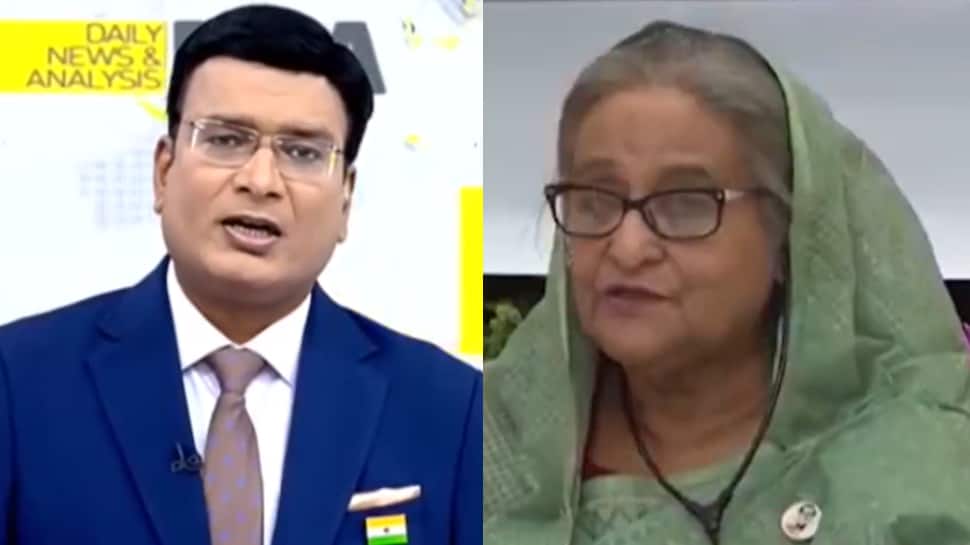
A landmark verdict has seen former Bangladeshi Prime Minister Sheikh Hasina sentenced to death by the country’s International Crimes Tribunal (ICT). This judgment has ignited a fierce debate, questioning whether it represents a legitimate pursuit of justice or a politically driven reprisal. The ruling comes as Hasina is reportedly in India, prompting significant speculation regarding New Delhi’s potential actions and its treaty obligations.
The ICT in Dhaka issued the death sentence in connection with the 2024 student movement. What began as a protest against job quotas evolved into widespread national demonstrations against the Hasina administration. These protests resulted in fatalities among students, demonstrators, and security forces, with the tribunal holding Hasina accountable for these tragic events.
Five key charges were brought against the former prime minister: ordering killings, delivering inflammatory speeches that incited violence, obstructing justice and tampering with evidence, ordering the killing of student Abu Sayeed, and involvement in the murder and cremation of five individuals in Chankharpul. Hasina received the death penalty for the first two charges and a life sentence for the third.
While Hasina has a 30-day window to appeal, the tribunal has stipulated that she cannot do so from abroad. This effectively requires her return to Bangladesh, a move she has indicated she will not make. She has publicly denounced the verdict as ‘wrong, biased, and politically motivated,’ asserting that her defense was not adequately presented and that the tribunal operates under an unelected government. Hasina has expressed willingness to present her case before the International Criminal Court.
Bangladesh’s interim government has formally requested India’s assistance in extraditing Hasina, citing the 2013 extradition treaty. However, the treaty contains specific clauses, including Article 6, which allows for the refusal of extradition if the alleged offense is political in nature. Given Hasina’s claims of political motivation, India’s obligation to extradite is questionable under these terms.
The ICT’s own establishment and recent amendments have drawn scrutiny. Initially created by Hasina’s government to address 1971 war crimes, the tribunal’s scope was expanded by the current interim government to include recent events like the student movement. Concerns have been raised about the tribunal’s impartiality, with judges and prosecutors appointed by the interim government, leading some critics to label it a ‘kangaroo court.’ The timing of the verdict, coinciding with Hasina’s wedding anniversary after a postponement, has also fueled speculation.
The ruling has already triggered protests and rallies by Hasina’s supporters in Bangladesh, with reports of violent confrontations. The escalating political tension has observers concerned about the country’s potential descent into instability. India’s response, balancing diplomatic relations, legal frameworks, and regional security, is a critical element to watch in this unfolding situation.