




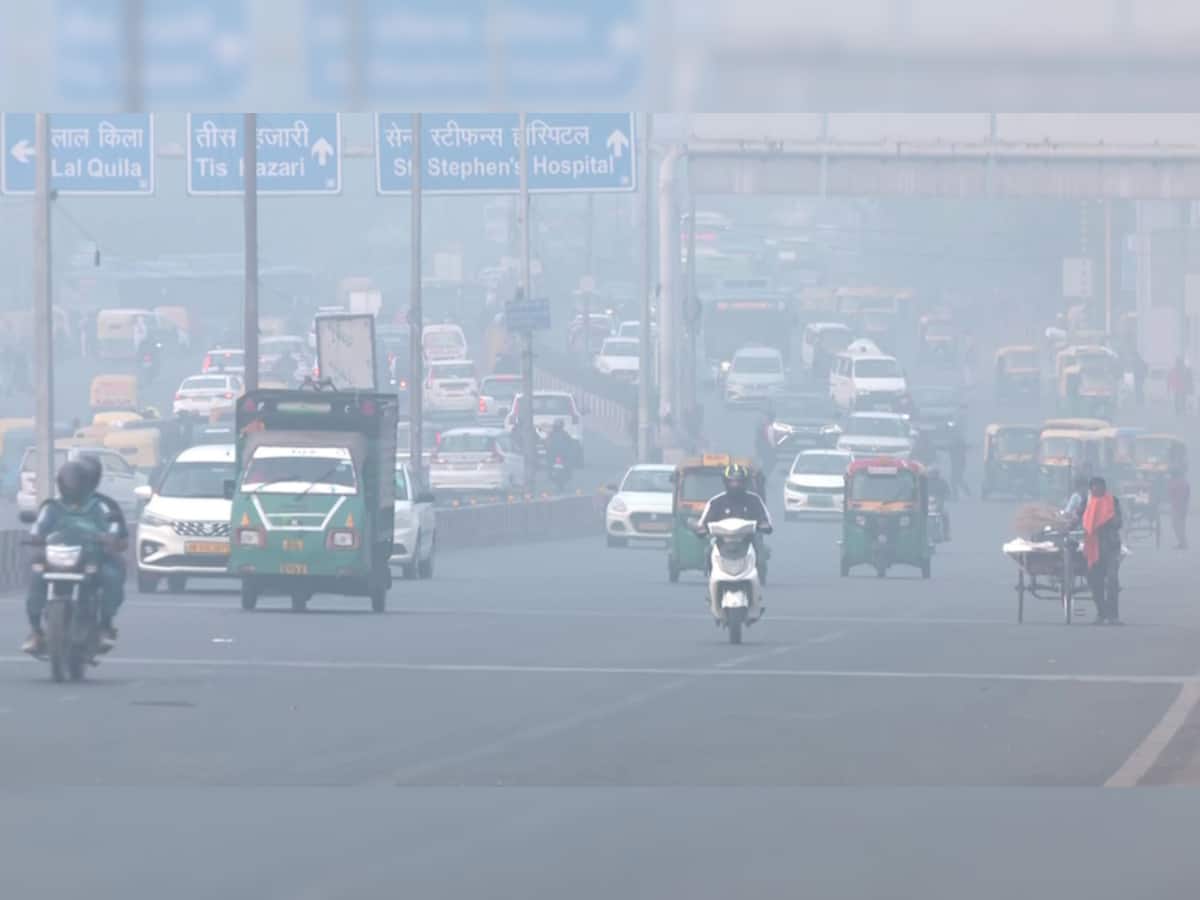
Delhi’s air quality registered a slight improvement on Friday morning, yet it continues to languish in the ‘very poor’ category. Despite a raft of pollution control measures implemented by the government and environmental agencies, the Central Pollution Control Board (CPCB) reported the city’s overall Air Quality Index (AQI) at 370 at 8 am. This marks a marginal recovery from the 391 AQI recorded on Thursday afternoon.
However, breathing clean air remains a distant hope for many residents. Key locations like IGI Airport T3 (AQI 307) and ITO (AQI 378) show concerning levels. Punjabi Bagh also reported a high AQI of 379. Other areas like Najafgarh (350), North Campus DU (385), Aya Nagar (340), and CRRI Mathura Road (370) also experienced significantly polluted air, with many areas shrouded in thick haze.
Alarmingly, some localities dipped into the ‘severe’ category. Anand Vihar registered an AQI of 418, Ashok Vihar 411, and Rohini and RK Puram recorded extremely high levels at 424 and 401, respectively. These figures highlight the persistent challenge of air pollution in the national capital.
According to standard AQI classifications, levels between 301 and 400 are deemed ‘very poor’, while 401-500 fall into the ‘severe’ category. The recent spike in pollution followed a day of dense smog on Thursday, with the average AQI hovering around 399. This situation has prompted judicial intervention.
The Delhi High Court has recommended suspending outdoor sports for schoolchildren during the winter months (November-January) to safeguard their health. Concurrently, the Supreme Court has mandated subsistence allowances for construction workers impacted by the GRAP-III restrictions, which have been in effect since November 11. These GRAP-III measures impose stringent controls on construction, vehicular, and industrial activities to combat the escalating air pollution crisis.