.jpeg "Featured Image")




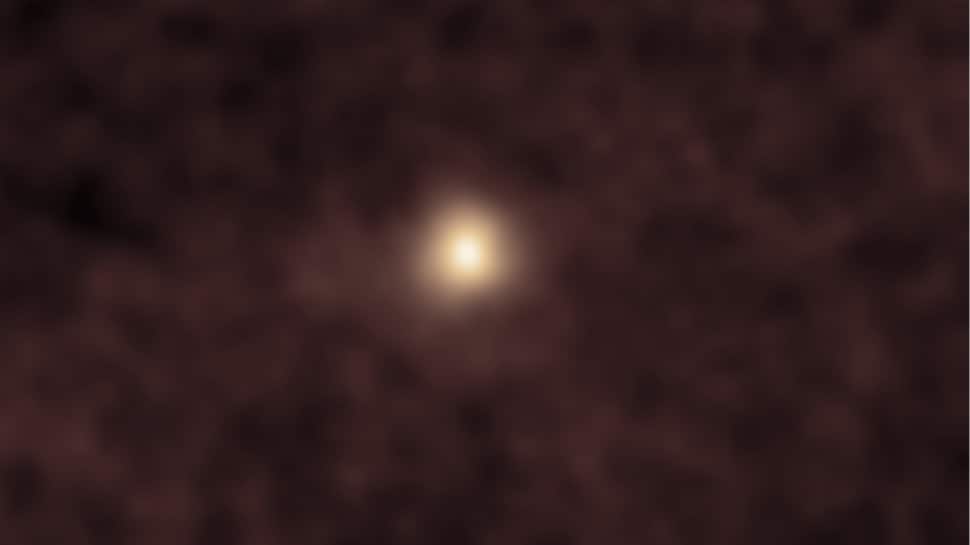
A remarkable visitor from beyond our solar system, interstellar comet 3I/ATLAS, has been observed by a collaborative effort between NASA and ISRO. This celestial wanderer, traveling at an astonishing 130,000 miles per hour, marks only the third confirmed interstellar object ever detected. High-resolution images were captured by India’s Mount Abu telescope, while NASA utilized multiple spacecraft for close-up observations as the comet passed Mars.
NASA’s Mars orbiters provided some of the clearest views. The Mars Reconnaissance Orbiter’s HiRISE camera delivered sharp images of the comet’s developing coma, a cloud of gas and dust, as solar radiation began to affect its nucleus when it was approximately 19 million miles away.
Further insights came from NASA’s MAVEN orbiter, which detected a hydrogen halo using its Ultraviolet Spectrograph. This observation confirmed the sublimation of water-ice, indicating that 3I/ATLAS carries water originating from another star system.
Even the Perseverance rover on the Martian surface contributed, capturing a faint streak of the comet with its Mastcam-Z camera, showcasing the reach of modern planetary science. NASA’s solar observation missions, including STEREO, SOHO, and PUNCH, were also instrumental in revealing subtle tail structures influenced by solar wind.
Deep-space missions like Psyche and Lucy provided crucial orbital data, helping scientists precisely map the comet’s hyperbolic trajectory through our solar system.
On Earth, ISRO’s 1.2-meter telescope at Mount Abu provided detailed optical images, revealing the comet’s coma and detecting characteristic chemical emissions. The study of 3I/ATLAS is vital for understanding planetary formation in other systems, comparing chemical compositions across different stellar environments, and refining models of interstellar object travel.