



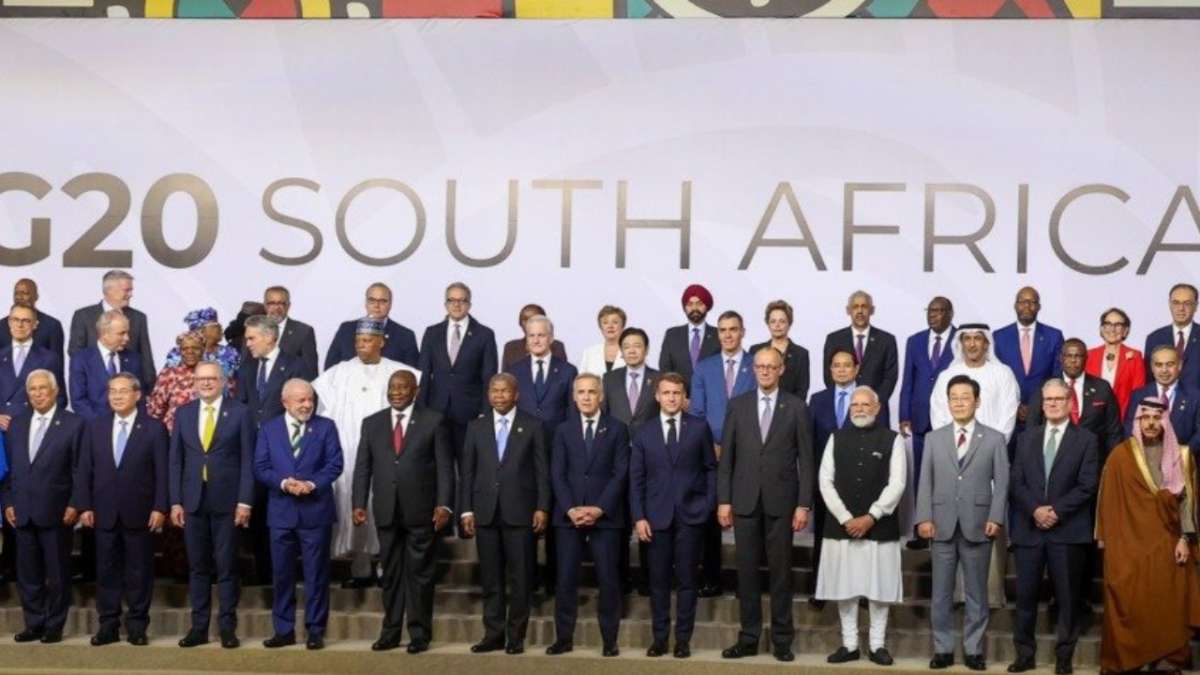
The G20 Summit concluded with a powerful declaration emphasizing solidarity, equality, and sustainability as the cornerstones of inclusive global growth. This 39-page document acknowledges the significant challenges facing the world, including escalating geopolitical tensions, conflicts, and widening inequality, which collectively contribute to economic uncertainty and fragmentation. Leaders reaffirmed their commitment to multilateral cooperation, stressing that no nation should be left behind. They highlighted the interconnectedness of the global community and the necessity of macro policy coordination and robust global partnerships for sustainable development.
The declaration specifically addresses the impact of current political and socio-economic environments, underscoring the belief in collective action through multilateralism to surmount shared challenges. It reaffirms an “unwavering commitment” to uphold international law, including humanitarian law and the UN Charter, promoting the peaceful resolution of disputes. While not naming specific countries, the text clearly referenced the principle that states must refrain from the threat or use of force to acquire territory, emphasizing the importance of territorial integrity and political independence for all nations.
Disaster resilience and response were also prominent themes. The declaration calls for special attention to be paid to vulnerable populations and nations, particularly Small Island Developing States (SIDS) and Least Developed Countries (LDCs), who are disproportionately affected by disasters and lack the resources for adaptation and recovery. The significant obstacle of high debt levels in many developing economies, which hinders investment in critical areas like infrastructure, healthcare, and education, was also recognized.
Energy security was identified as fundamental to national sovereignty and global prosperity. The G20 commended the South African Presidency’s Voluntary Energy Security Toolkit, a practical resource designed to help countries strengthen their energy systems through integrated approaches to technology, risk management, infrastructure resilience, and emergency preparedness. Sustainable industrialization was hailed as vital for development and energy transitions, with principles for equitable benefit sharing highlighted. The G20 Critical Minerals Framework was also welcomed as a voluntary blueprint to ensure critical minerals contribute to prosperity and sustainable development.
Food security remains a key concern, with leaders affirming the need for political will to improve access to safe, healthy, and nutritious food for all. The potential of digital and emerging technologies, including AI, for positive global impact and equitable benefit was also recognized. The crucial role of Multilateral Development Banks (MDBs) in poverty reduction and economic growth was acknowledged, alongside discussions on climate action, anti-corruption measures, and support for migrant workers and refugees.
The G20 Social Summit held alongside the main event provided a platform for non-government stakeholders to voice their perspectives. The declaration concluded with a renewed commitment to the G20 as the primary forum for international economic cooperation, emphasizing its continued operation based on consensus and equal participation among all member states.