




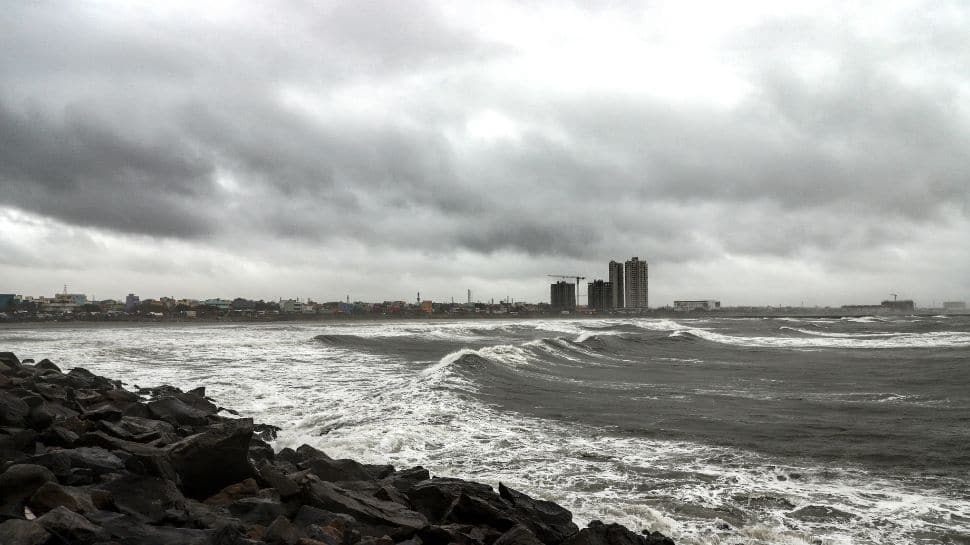
Cyclone Ditwah, a powerful tropical storm, has emerged over the Southwest Bay of Bengal, prompting urgent alerts from the India Meteorological Department (IMD) for Tamil Nadu, Puducherry, and South Andhra Pradesh. This destructive storm, which formed around November 26, 2025, has rapidly intensified, leading to significant devastation, particularly in Sri Lanka.
The genesis of Cyclone Ditwah can be traced to a well-marked low-pressure area. Favorable atmospheric conditions, including exceptionally warm sea surface temperatures ranging from 28°C to 30°C, provided the necessary heat energy for its rapid development. Low vertical wind shear, measured at 10–15 knots, further facilitated the vertical growth of cloud systems. Additionally, moisture-laden monsoonal winds continuously fed the burgeoning storm.
In a remarkably short period of 24 to 36 hours, the system escalated from a low-pressure area through stages of depression and deep depression to become a full-fledged cyclonic storm. The name ‘Ditwah’ was contributed by Yemen, derived from the Detwah Lagoon, a notable ecological site located in Yemen’s Socotra Archipelago. Cyclone names are assigned sequentially from a list provided by 13 member countries of the WMO-ESCAP panel.
Sri Lanka bore the brunt of Cyclone Ditwah’s fury, reporting a tragic death toll of at least 410 people, with an additional 336 individuals missing. Heavy rainfall, widespread flooding, and devastating landslides, particularly in the Kandy region, have caused extensive damage. Over 20,000 people have been displaced, and nearly 1.2 million residents have been impacted across the island. Emergency response efforts are ongoing, including clearing debris and restoring essential services. India has dispatched relief supplies and humanitarian aid to Sri Lanka under Operation Sagar Bandhu.